Fairy Rings: The Real Science Behind Nature’s Most Magical Circles
Fairy rings are mysterious circles of mushrooms found in fields and forests. Discover the science behind these magical formations and the fascinating fungi that create them.
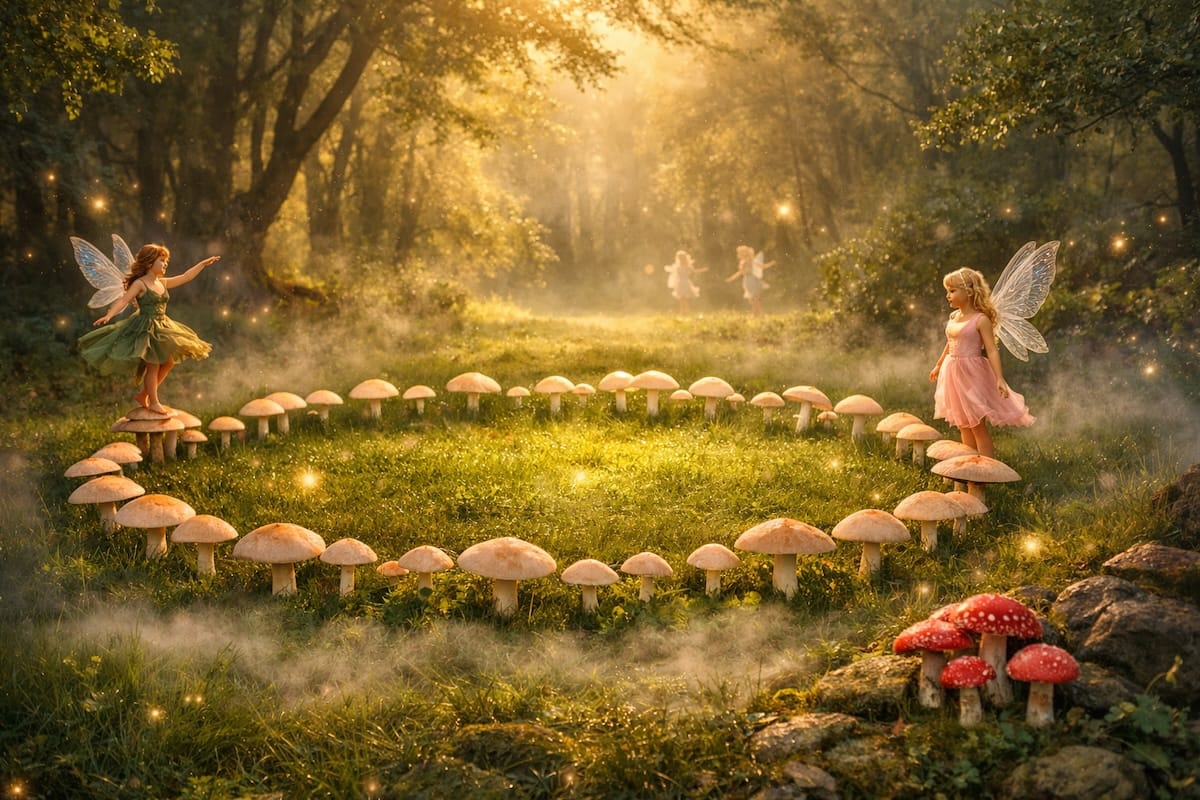
Walk through a quiet meadow early in the morning and you might stumble upon something unusual.
A perfect circle of mushrooms rising from the grass.
Sometimes the ring is small enough to step over. Other times it stretches several meters across, like an invisible compass drawn gently across the earth.
For centuries, people looked at these mysterious circles and wondered the same thing:
Who made them?
In old folklore, these rings were believed to be places where fairies gathered to dance under the moonlight. Step inside one, people warned, and strange things might happen. You could fall asleep for a hundred years, lose track of time, or vanish into the fairy world entirely.
Today we know fairy rings are not created by magical beings dancing in the night.
But the real explanation behind them is still quietly magical.
Hidden beneath the soil is a vast network of fungi, spreading slowly through the earth and shaping the ecosystems around it. These tiny organisms help plants grow, recycle nutrients, and connect life underground in ways scientists are still discovering.
Fairy rings may not be gateways to another world — but they are reminders that nature often hides remarkable stories just beneath our feet.
What Exactly Is a Fairy Ring?
A fairy ring is a natural circle of mushrooms that appears in grasslands, forests, lawns, or open meadows. The mushrooms grow in a curved line or nearly perfect ring, often expanding a little further outward each year.
If you look closely, you might notice a few curious details:
- The mushrooms form a clear circular pattern
- The grass around the ring may look different
- The circle slowly grows larger over time
Some fairy rings remain small, only a few feet wide. Others become surprisingly large. One famous example in France stretches more than 600 meters across and is believed to be hundreds of years old.
At first glance, the shape feels almost intentional — as though the land itself decided to draw a circle.
But the real reason lies underground.
The Hidden Life Beneath the Soil
The mushrooms we see above the ground are only a small part of the fungus.
The real organism lives below the surface in a network called mycelium.
Mycelium is made of microscopic threads that spread through soil like a living web. These threads search for nutrients, break down organic matter, and interact with nearby plant roots.
Some scientists even describe fungal networks as the “wood wide web.” Through these connections, fungi help trees and plants exchange nutrients and communicate with one another.
When conditions are right — usually after rain and mild temperatures — the fungus produces mushrooms. These mushrooms release spores into the air, allowing the organism to reproduce.
When the underground network expands outward evenly, mushrooms appear along its outer edge.
And that’s how a fairy ring forms.
Why Mushrooms Grow in Circles
The circular pattern happens because the fungus begins growing from a single starting point.
Imagine dropping a stone into calm water. Ripples spread outward in a perfect circle.
Fungi grow in a similar way.
A tiny fungal spore lands in the soil and begins spreading underground. As the network grows outward, it uses up nutrients in the center. Over time, the fungus stops producing mushrooms in that inner area.
Instead, new mushrooms appear along the outer edge where nutrients are still plentiful.
The result is a ring.
Each year the circle expands a little further, slowly marking the growth of the fungus beneath the soil.
Why the Grass Around Fairy Rings Looks Different
If you ever notice a fairy ring in a lawn or field, the grass nearby often looks unusual.
Sometimes the grass along the ring is greener and thicker. In other cases, the grass inside the ring may look weaker or slightly dry.
This happens because fungi interact closely with the soil and surrounding plants.
As fungi break down organic material, they release nutrients like nitrogen. In some situations this extra nutrition helps nearby plants grow faster. In other cases the fungus competes with plants for resources.
These subtle changes create visible circles in the landscape, even when mushrooms are not present.
Gardeners sometimes discover these patterns and wonder what caused them to appear so suddenly.
The answer is a quiet fungal network growing beneath the surface.
Fairy Rings in Folklore and Legend
Long before scientists understood fungi, fairy rings inspired countless stories.
In English and Celtic folklore, they were believed to mark the places where fairies gathered to dance beneath the moon. The circles were said to appear after nights of celebration among magical creatures.
Stepping into one was considered risky.
According to old legends, you might:
- become trapped in a magical dance
- fall asleep for many years
- disappear into the fairy realm
- return home only to discover decades had passed
Other traditions offered different explanations. Some believed fairy rings were created by lightning strikes. Others claimed dragons formed them by sweeping their tails across the grass.
In Germany they were sometimes called “witch rings.”
In France, they were known as “sorcerer circles.”
Without scientific knowledge of fungi and underground networks, these mysterious circles truly seemed enchanted.
The Mushrooms That Create Fairy Rings
Several types of fungi are capable of forming fairy rings.
One of the most common is the fairy ring mushroom (Marasmius oreades), a small tan mushroom often found in grassy fields.
Other species that may create these circles include:
- meadow mushrooms
- puffballs
- certain agaric mushrooms
Each species behaves slightly differently. Some rings produce mushrooms every year, while others appear only occasionally when conditions are just right.
This is why fairy rings can vary greatly in size and appearance.
The Quiet Importance of Fungi
Beyond their mysterious shapes, fungi play an essential role in nature.
They act as recyclers, breaking down fallen leaves, dead wood, and organic debris. This process returns valuable nutrients to the soil and helps new plants grow.
Many fungi also form partnerships with plant roots. These relationships allow plants to absorb water and minerals more efficiently while providing sugars back to the fungi.
Without fungi, many ecosystems would struggle to survive.
Forests, grasslands, and even our gardens rely on these quiet organisms working underground.
Fairy rings are simply one visible sign of this hidden world.
Bringing Fairy Magic Into Your Own Garden
Although science explains how fairy rings form, the folklore surrounding them still captures people’s imagination.
For generations, these circles of mushrooms were thought to mark the places where fairies gathered beneath the moon.
Today many people enjoy recreating a bit of that magical feeling in their own gardens.
Miniature fairy gardens — small landscapes with tiny houses, moss, stones, and fairy figures — allow people to create whimsical little worlds outdoors. Even a small patch of garden can become a tiny enchanted scene.
If you enjoy that idea, you can explore my collection of Fairies and beautifully crafted Fairy Sets. Inspired by the same sense of wonder that fairy rings have inspired for centuries, these pieces can transform a quiet corner of a garden into a storybook landscape.
Placed among plants or moss, they invite imagination to wander — much like fairy rings themselves once did.
A Circle of Wonder
The next time you see a circle of mushrooms in the grass, pause for a moment.
Beneath the soil, a living network of fungi may have been growing quietly for years, expanding slowly outward in search of nutrients.
Above the ground, a perfect ring marks its presence.
It may not be a doorway to the fairy world.
But it is still something remarkable — a small reminder that nature is full of patterns, stories, and quiet magic waiting to be noticed.