If Trees Could Talk: What Forests Might Say About Friendship, Patience, and the Quiet Magic of Nature
A whimsical but informational look at why trees feel full of personality, what forests seem to teach us, and why imagination helps us care more deeply about nature.
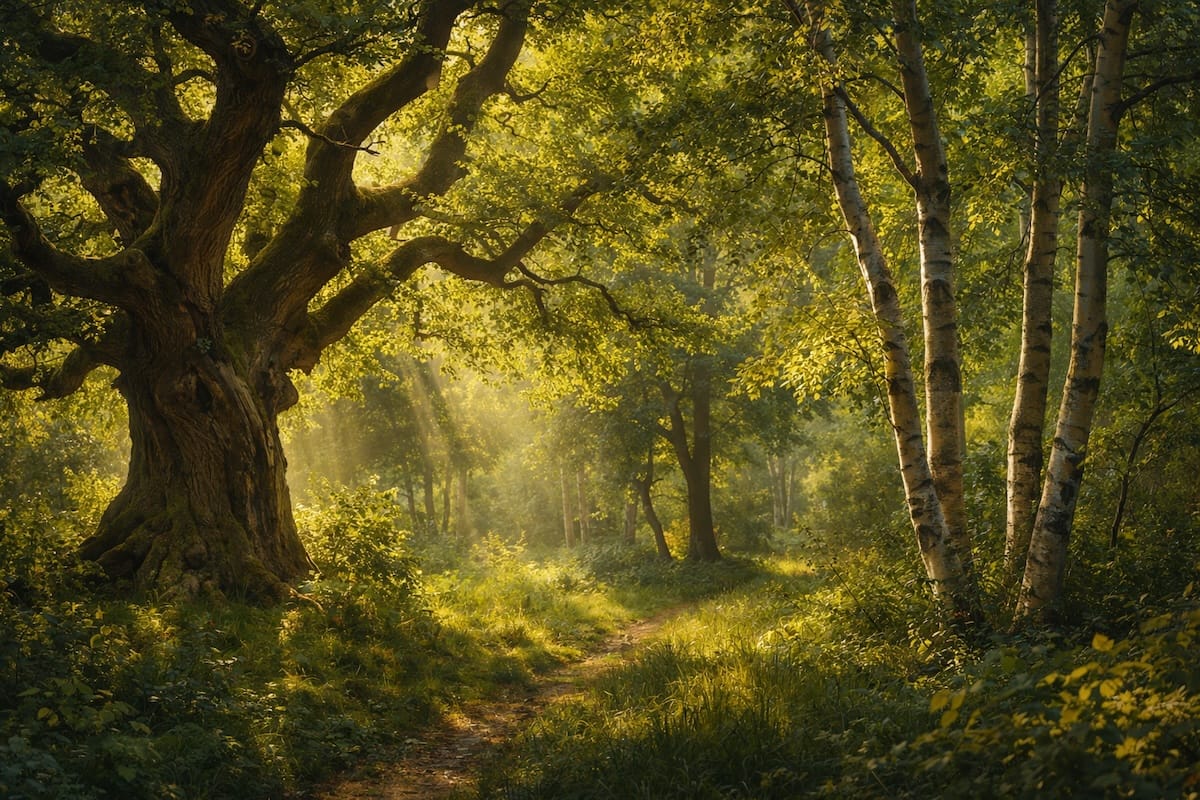
There is a reason people keep imagining trees with personalities.
An old oak can feel steady and wise. A willow can seem thoughtful. A row of birches can look as if they are sharing a joke in the wind. Even though we know trees do not speak in words, they often feel expressive in ways that are difficult to ignore.
That is why the idea of talking trees has lasted for centuries in stories, folklore, and children's imagination. It is whimsical, yes, but it also grows from something real. Trees may not have voices, yet they do communicate presence, rhythm, age, and even mood in ways humans naturally respond to.
And when we imagine what trees might say, we often discover that the question is really about us. What do we hear when we finally slow down? What do forests seem to teach without ever speaking directly?
If you have enjoyed posts like If Rivers Had Personalities, The Day Gravity Took a Coffee Break, or How Trees Gossip in the Wind, this idea belongs beautifully in that same playful corner of wonder.
Why Trees Feel So Full of Personality
Part of it is visual.
Trees have shape, posture, scars, lean, movement, and age. A twisted trunk can seem stubborn. A flowering branch can seem generous. A very old tree can feel like it has opinions even before a breeze touches it.
But part of it is emotional too.
Trees stand through seasons that transform everything around them. They hold still through storms. They lose leaves and grow them back. They offer shade without asking anything in return. For people, that kind of steady presence often feels almost personal.
We are quick to recognize character in anything that appears both alive and enduring. Trees meet that condition perfectly.
What Trees Might Say About Patience
If trees could talk, patience would probably be one of their favorite subjects.
Trees do almost everything slowly. They grow slowly. They recover slowly. They adapt slowly. But slow does not mean weak. In fact, one of the most impressive things about trees is how much they accomplish without rushing.
A tree does not panic because spring takes time.
It does not argue with autumn.
It does not try to force fruit before the season is right.
That kind of patience feels especially meaningful in a world that often rewards speed over depth. Trees suggest another way of living: one built on steadiness, timing, and quiet confidence rather than urgency.
Perhaps that is one reason forests feel calming. They do not ask us to hurry. They remind us that some good things become themselves very gradually.
What Trees Might Say About Friendship
Modern science has made this idea even more interesting.
Trees are not isolated beings in the way people once imagined. Through underground fungal networks and root-level interactions, forests are far more connected than they appear from above. Nutrients, chemical signals, and ecological relationships create a kind of living conversation beneath the soil.
That does not mean trees have friendships in the human sense. But it does mean that forests work more like communities than collections of separate individuals.
This is partly why the image of talking trees feels so natural. We already sense that forests are relational places. Nothing stands entirely alone there.
If trees could speak in our language, I suspect they would have much to say about staying connected, weathering hard seasons together, and sharing what helps the whole woodland remain alive.
That same sense of connection is part of what makes your more whimsical site sections so inviting too, from Meet My Characters to the playful world of Fairy Sets.
Why Forests Feel Like Places of Wisdom
People have long treated forests as places where important things happen.
Fairy tales send children into woods before they discover courage.
Fantasy stories hide doors, creatures, and ancient truths among trees.
Real life does something similar. People go walking in forests when they feel overwhelmed, restless, or uncertain. Somehow, being among trees helps many of us think more clearly.
Part of this is physical. Natural spaces reduce noise, soften visual stress, and invite slower attention. But part of it is symbolic too. Trees represent endurance. They embody rootedness without rigidity. They show us what it looks like to remain alive through change.
No wonder they keep becoming guides in fiction and imagination.
Why the Idea of Talking Trees Still Matters
At first glance, imagining talking trees may seem like pure make-believe.
But there is something useful hidden inside it.
When we imagine trees as expressive, we tend to look at them more carefully. We stop rushing past them as background scenery. We begin to notice bark textures, branch shapes, leaf movement, and the difference between one kind of tree and another.
Whimsy can do that. It can bring attention back to the ordinary world.
This is one of the best things about playful nature writing. It does not have to compete with science. It can lead people toward deeper interest in the real world by first helping them feel connected to it.
If a child imagines a pine tree as serious and protective, that child may be more likely to care whether forests are cut down. If an adult starts thinking of an old tree as a witness to time, that tree becomes harder to overlook.
Wonder often begins in imagination and ends in care.
What Trees Might Say About the Seasons
Trees would probably have strong opinions about the seasons.
Spring might be described as hopeful but exhausting.
Summer would likely be praised for its fullness, though perhaps with a few complaints about drought.
Autumn would be treated with respect for its beauty and honesty.
Winter, I suspect, would be misunderstood by humans and defended strongly by evergreens.
What matters here is not the joke, although the joke is fun. It is the deeper truth beneath it: trees live in intimate partnership with the seasons. They do not resist seasonal change the way people often do. They participate in it.
That is part of why they seem wise. Trees do not cling to one version of themselves all year. They adapt visibly. They rest when needed. They let go when it is time.
There is something quietly instructive in that.
Why Children Understand This Instinctively
Children often talk to trees without being told to.
They assign names to them. They imagine feelings, roles, and secret histories. Adults sometimes dismiss that as fantasy, but it may actually be a very natural form of attention.
Children are often quicker to sense personality in the natural world because they have not yet learned to flatten everything into category and function. A tree is not just "a tree." It is that tree. The climbing one. The shady one. The one that looks mysterious in the rain.
This kind of noticing is valuable.
It creates relationship.
And relationship often leads to care.
That is part of the charm behind collections like your Gallery of the Stars and the character-driven corners of the site. They encourage readers to connect emotionally before they analyze logically.
A Whimsical Idea With Real Roots
The idea of trees talking may be playful, but it is not empty.
It helps translate real qualities of forests into a language people feel immediately. Patience becomes growth rings. Community becomes root networks. Wisdom becomes shade, age, and seasonal endurance. Quietness becomes presence.
That translation matters because people protect what they feel connected to.
When trees become more than scenery, forests become more than land. They become places of meaning.
And perhaps that is the real power of whimsical thinking. It does not remove us from reality. It brings us closer to it through affection, attention, and delight.
What We Hear When We Finally Slow Down
If trees could talk, they would probably not tell us anything flashy.
They would likely say:
- stay a little longer
- look up more often
- notice what changes slowly
- do not confuse silence with emptiness
- remember that stillness can be full of life
That sounds simple, but it is not small.
In many ways, it is exactly the sort of reminder people need.
The next time you walk through a park, woodland path, or quiet garden, it might be worth asking the question again: if trees could talk, what would they say?
The answer may not arrive in words.
But you may find yourself paying better attention to the branch overhead, the bark beneath your hand, the breeze moving through leaves, or the strange comfort that comes from standing beside something rooted and alive.
And that alone is a meaningful kind of conversation.