Moon Gardens and Night-Blooming Flowers in Story and Imagination
Explore the beauty of moon gardens and night-blooming flowers, and why evening fragrance, pale blooms, and moonlight feel so magical in story and imagination.
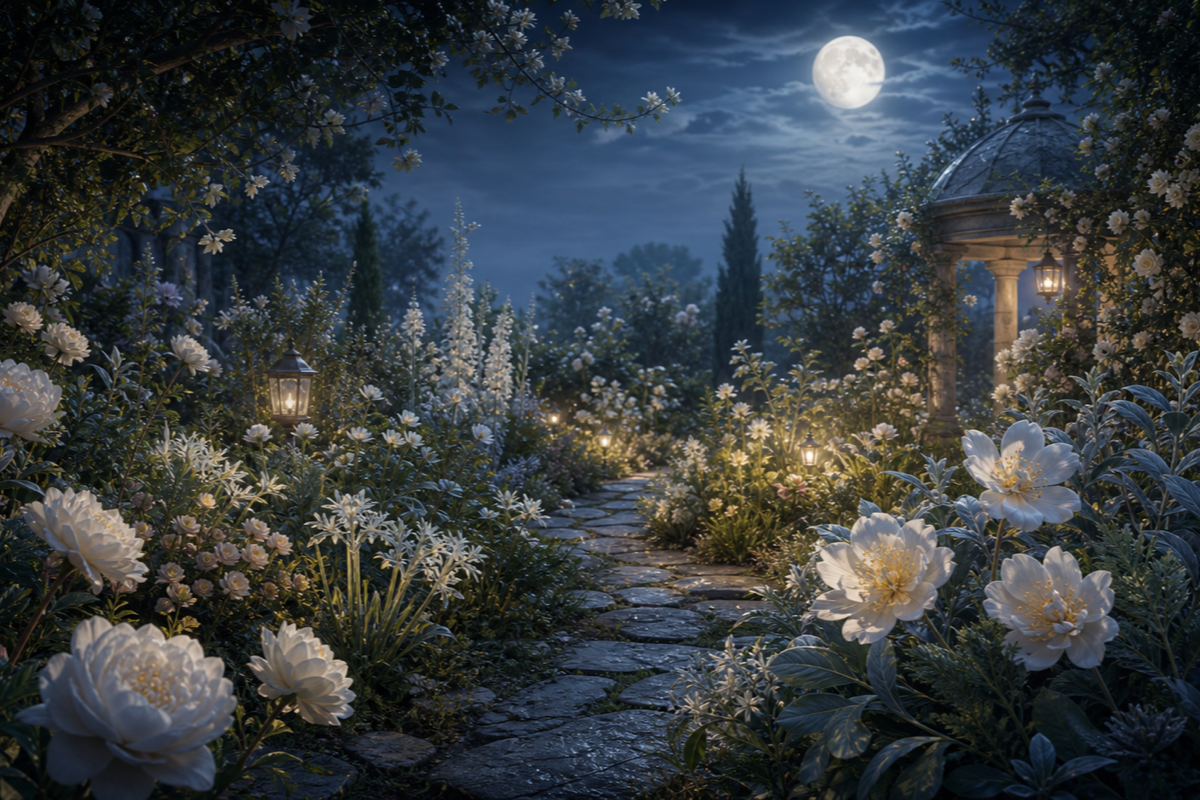
Some gardens belong to daylight.
They show their colors openly. Bees move through them. Butterflies hover over them. Every petal seems designed for sun and visible abundance. But other gardens feel as if they are waiting for evening.
The shadows lengthen, the air cools slightly, and suddenly the place begins to feel different. Pale flowers become brighter against dark green leaves. Fragrance strengthens. The mood changes from cheerful to hushed, from busy to mysterious.
This is the world of moon gardens and night-blooming flowers, and it has captivated people for a long time.
Moon gardens are often designed around plants that glow softly in low light, release fragrance in the evening, or simply create a more reflective kind of beauty after sunset. In story and imagination, they often feel magical because they reward a different kind of attention. They are not gardens for rushing through. They are gardens for lingering in.
If you have enjoyed imaginative pieces like Hidden Gardens in Fantasy Stories: Beauty, Secrecy, and Wonder or The Magic of the Moon: Lunar Myths and Mysteries, moon gardens belong beautifully beside them.
What Is a Moon Garden?
A moon garden is usually a garden designed to be especially beautiful in the evening and under moonlight.
This often means using:
- pale or white flowers that stand out at dusk
- silver or gray foliage that reflects light softly
- fragrant blooms that become stronger in the evening
- pathways, seating, or structure that invite nighttime use
The goal is not simply to have a garden that survives after sunset. It is to create one that becomes more expressive then.
This is part of what makes moon gardens so compelling. They shift the idea of beauty away from brightness and into atmosphere.
Why White Flowers Feel So Magical at Night
White and pale flowers play a major role in moon gardens for a simple reason: they catch low light well.
At dusk or in moonlight, darker colors often become less distinct. Pale flowers, by contrast, can seem to float in the garden. They gather what little light is available and give it back softly, which makes them feel almost luminous without needing to glow unnaturally.
This creates a very different kind of visual beauty from a daytime flower border.
Instead of bold color contrast, the effect comes from softness, shape, and placement. A white rose, pale lily, or cluster of moon-colored blossoms can appear far more dramatic at night than it does at noon.
That visual transformation is one reason moon gardens feel so story-like. The same plant becomes a different presence depending on the hour.
Fragrance Belongs to the Evening
Night gardens are not only about sight.
They are also about scent.
Many flowers release fragrance more strongly in the evening, and this can make a moon garden feel deeply immersive. Jasmine, nicotiana, certain lilies, evening primrose, and other night-friendly blooms can perfume the air in ways that daytime heat never quite reproduces.
This matters because scent changes experience profoundly.
A visually beautiful garden can still feel distant if it is only admired from the outside. Fragrance draws a person in. It makes the garden intimate. It becomes something you breathe as well as see.
That intimacy is part of the enchantment.
Night-Blooming Flowers Feel Like a Secret
There is something particularly charming about flowers that seem to come alive when the day is ending.
Night-blooming plants feel secretive not because they are hidden, but because they belong to hours many people overlook. Their beauty is available, but only to those willing to be there at the right time.
This creates a natural feeling of selectiveness.
Day flowers announce themselves to everyone. Night-blooming flowers reward patience. They suggest that nature has moods, schedules, and forms of beauty that do not always align with human habit.
That is part of why they feel so magical in fiction. They behave as though they know something about timing that the rest of the world has forgotten.
Moon Gardens Change the Pace of Attention
A daylight garden often invites movement.
You walk through it, inspect blooms, notice bees, pull weeds, plan improvements, or admire bursts of color. A moon garden encourages something quieter. Because the light is lower and the details unfold more slowly, the whole experience becomes more reflective.
You do not scan it the same way.
You stay.
You listen more.
You notice air, scent, and shape rather than only color.
This slower pace is one reason moon gardens feel emotionally different from ordinary flower beds. They create room for contemplation. They turn a garden into a place of evening atmosphere rather than daytime productivity.
If you enjoy the softer sensory side of nature, you may also like Petrichor and the Beauty of Rain on Dry Earth and A Restful Nature Walk: How to Make Time Outdoors Feel Calm Again.
The Moon Has Always Added Meaning
Moonlight already carries symbolism in human imagination.
It is linked with dreams, secrets, romance, calm, transformation, and mystery. When a garden is designed to respond beautifully to moonlight, it naturally gathers some of that symbolic weight.
This is why moon gardens feel so at home in story.
They are not merely pretty nighttime spaces. They are places where emotional tone deepens. A conversation under moonlit flowers feels different from one in the midday sun. A hidden path bordered by pale blooms feels more charged with possibility than the same path at noon.
The moon does not have to perform literal magic for the setting to feel enchanted. It simply changes perception enough to make beauty feel more interior.
Moon Gardens in Story and Imagination
Writers and readers love moon gardens because they hold several things at once.
They are beautiful, but not loud.
They are private, but not empty.
They are sensual, but often gentle rather than overwhelming.
They can be romantic, mysterious, peaceful, or quietly uncanny depending on the story around them.
This flexibility makes them powerful settings in fantasy, fairy tales, and reflective writing alike.
A moon garden can be:
- a place of healing
- a place of confession
- a place of waiting
- a place of hidden meetings
- a place where magic feels believable
It is hard to think of many settings that carry beauty and secrecy together so gracefully.
Real Moon Gardens Still Matter
Even outside literature, moon gardens offer something valuable.
They remind us that gardens are not only for daytime admiration. They can shape evening life too. A small patio with pale flowers, silver foliage, and one fragrant plant can become more emotionally memorable at dusk than a much larger space that only works in full sun.
This matters because many people are outside most in the evening during warm months.
A garden that greets twilight beautifully changes the whole experience of home. It creates a place to end the day rather than only begin it.
That feels especially meaningful in a busy world. Not every beautiful space must ask for daytime energy. Some can offer evening stillness instead.
Beauty After Sunset
Moon gardens and night-blooming flowers capture imagination because they remind us that beauty does not disappear when daylight fades. It changes character.
Color gives way to glow.
Brightness gives way to softness.
Activity gives way to atmosphere.
And in that quieter form, many people discover a kind of beauty that feels more intimate than the daytime version.
That is the charm of the moon garden. It belongs to the hour when the world gets gentler, scents travel farther, and pale flowers seem to gather light from almost nowhere.
No wonder story and imagination keep returning to it.
It is a garden made not only of plants, but of mood.