A Garden at Dusk: Why Evening Feels So Different Outdoors
Discover what makes a garden at dusk feel so different from daytime, from softer light and evening scent to slower attention and quiet atmosphere.
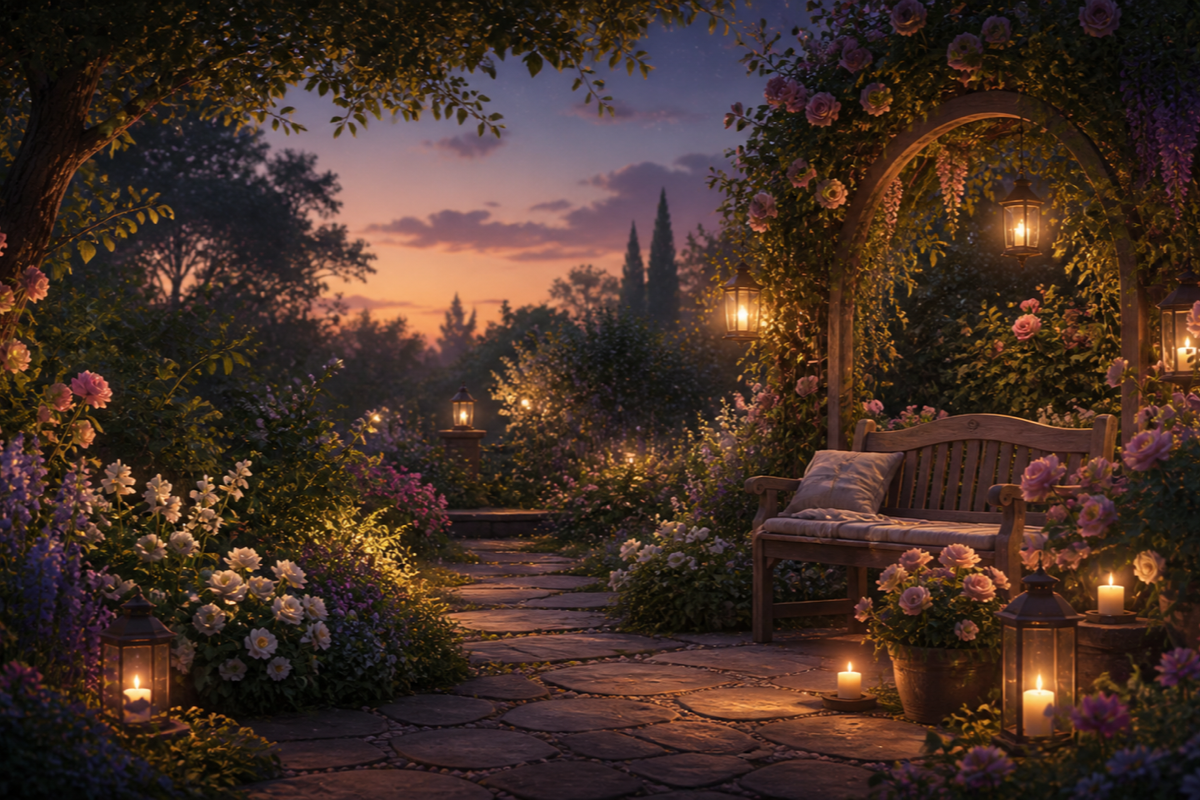
Some of the most beautiful moments in a garden happen after the brightest part of the day has already passed.
The sun lowers. Colors soften. Air cools a little. Shadows lengthen through leaves and across paths. The garden, which may have felt busy and bright only an hour earlier, begins to seem quieter, deeper, and more reflective.
This is the particular charm of dusk outdoors.
A garden at dusk often feels very different from the same garden at noon. It is not only darker. It is gentler. Fragrance can become stronger. Birds change their behavior. The wind feels different. Light stops showing everything equally and begins selecting what to reveal.
That change in atmosphere is one reason dusk can feel almost magical in a garden. It rewards a different kind of attention from the kind we bring during the day. You do not look at a dusk garden the same way you look at a midday one. You move more slowly. You notice transitions. You start feeling mood as much as beauty.
If you have enjoyed pieces like Late Spring Gardens and the Quiet Magic of May or Moon Gardens and Night-Blooming Flowers in Story and Imagination, dusk belongs very naturally in that same world of garden atmosphere and evening wonder.
Dusk Changes the Light, and Light Changes Everything
The first big difference at dusk is the light itself.
Midday light tends to be bright and revealing. It shows color clearly, flattens fewer mysteries, and makes a garden easy to read quickly. Dusk light behaves differently. It softens edges, deepens shadows, and gives leaves, petals, and paths a quieter kind of depth.
This makes the garden feel less like a display and more like a place.
Certain flowers become more noticeable because of their shape or pale color. Leaves catch the last low sunlight and glow for a moment before dimming. Corners that looked ordinary in full day begin to feel private or hidden.
Dusk reminds us that beauty is not only about brightness. Sometimes it comes from what the light withholds.
The Air Feels Different Too
Gardens at dusk are not only visual experiences.
They are physical ones.
Heat begins to ease. The air may carry more scent. The body relaxes in ways it often does not during the hotter parts of the day. Even when the temperature change is small, the feeling of transition is often enough to make the whole space seem more breathable and more inviting.
That shift matters emotionally.
People often feel less guarded in the evening. The pressure of the day begins to loosen. In a garden, that loosening can feel especially clear because the natural world seems to be entering a different rhythm too.
Fragrance Often Grows Stronger
One of the great pleasures of dusk is scent.
Many gardens become more fragrant as the day cools. Some plants release stronger perfume in the evening, while others simply become easier to notice once heat, dryness, and daytime distraction begin to fall away. Roses, jasmine, herbs, and night-friendly flowers can make the air itself feel more textured.
This is one reason a dusk garden can feel more intimate than a daytime one.
Scent changes the way we experience a place. It moves the garden from scenery into atmosphere. You are not only looking at the space. You are inside it in a fuller sensory way.
That intimacy often feels restful.
Birds and Insects Change Their Rhythm
A garden at dusk also feels different because its inhabitants are shifting.
Birds often move into their evening patterns. Some calls quiet down. Others become more noticeable. Insects may change too. Daytime pollinators fade, while evening life begins to emerge. The overall feeling is less busy, but not less alive.
This is part of what makes dusk so compelling. It is a handover hour.
The garden is not shutting down. It is changing staff.
That transition gives the space a sense of layered life. What seemed obvious by day becomes subtler in the evening, and subtler life often feels more magical simply because it asks us to pay closer attention.
If you enjoy noticing those shifts in natural rhythm, you may also like The Quiet Night: What Wildlife Is Doing While We Celebrate Christmas Eve or The Secret Lives of Fireflies.
Dusk Makes Familiar Places Feel New
One of the loveliest things about dusk is how it can change a familiar garden without changing a single plant.
The path is the same path.
The tree is the same tree.
The bench is still where it was in the morning.
And yet the whole place feels different because the hour has changed the relationship between light, scent, air, and attention.
This is one reason evening time outdoors can feel surprisingly restorative. You are not escaping the ordinary world. You are seeing that the ordinary world still has different faces to offer.
That discovery matters. It adds freshness without requiring novelty.
Gardens at Dusk Invite Slower Attention
Bright daylight often encourages movement. Evening encourages staying.
At dusk, people are less likely to rush through a garden checking tasks or scanning for what needs work. They are more likely to sit, linger, or walk slowly. The atmosphere itself supports that pace.
This is part of why dusk can feel healing.
It does not merely give us something lovely to look at. It changes the speed at which we notice. And when attention slows without becoming empty, people often feel calmer, more thoughtful, and more present.
That kind of quiet is hard to manufacture indoors.
Evening Light Softens Emotion Too
There is also something emotional about dusk that goes beyond plants and weather.
It is the hour when many people naturally begin to review the day, let things go, or feel a little more reflective. When that emotional shift meets a garden, the setting can feel especially meaningful.
A dusk garden often feels like a place where the day is allowed to end well.
Not dramatically.
Not perfectly.
Just gently.
That gentleness is part of its beauty.
Why Dusk Feels So Close to Imagination
Dusk is one of the easiest times of day to describe in imaginative language because it already behaves like a threshold.
It is neither full day nor full night.
It is a time of changing edges.
Gardens respond beautifully to thresholds. Pale flowers brighten, dark leaves deepen, and hidden corners begin to matter more than open ones. This is why dusk so often appears in stories and artwork connected with memory, enchantment, and transition.
It is not that the garden becomes unreal.
It is that reality becomes softer and more layered for a little while.
That is often enough.
A Better Ending to the Day
Spending a little time in a garden at dusk can feel like stepping into a gentler ending.
The world is still alive, but less insistent. Beauty has not disappeared, but changed tone. The day has not fully gone, but its sharpest edges have eased.
That may be why gardens at dusk stay with people so strongly. They offer a form of quiet that does not feel empty. They offer beauty that does not need to impress. They offer atmosphere that invites rest without asking for anything in return.
And in busy lives, that kind of hour can feel deeply precious.
A garden at dusk is not only a lovely sight.
It is a different way of being in time.