Reading Autumn Leaves: A Simple Way to Notice Color, Shape, and Change
Look closer at autumn leaves: follow changing pigments, compare shades and shapes, and turn a familiar tree into a small seasonal observation project.
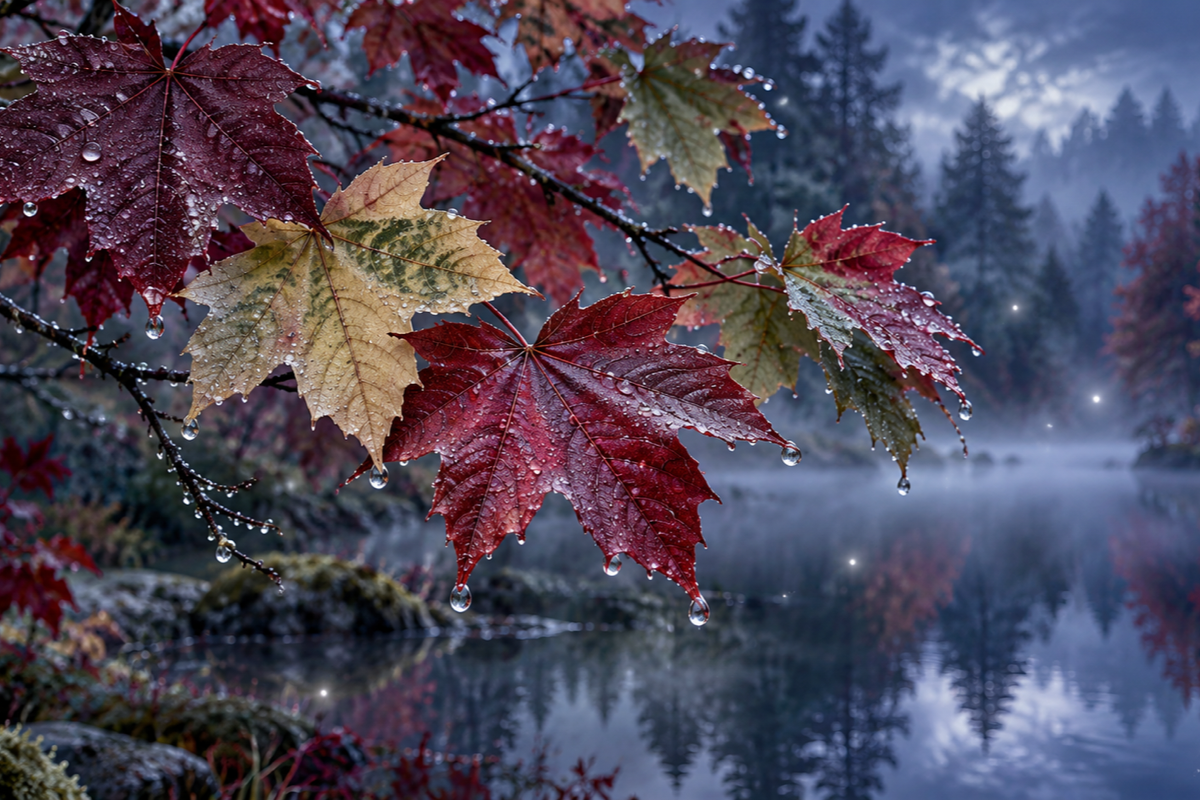
Two leaves from the same tree can look as though they belong to different seasons. One is still mostly green. The other has a red edge, a yellow center, and a few brown patches along its veins.
Look at them together and autumn becomes more than a view across a hillside. It becomes a change you can follow at the scale of a single leaf.
You do not need a spectacular woodland or a long journey to enjoy this. A tree beside a footpath, a garden shrub, or a familiar park can give you plenty to notice. The trick is to return with a little curiosity and let the details lead you.
Begin With One Tree
Choose a tree you can visit again. Take a moment to look at the whole crown before concentrating on a branch or a fallen leaf.
Where has the color changed first? Is it spread evenly, or concentrated in patches? Are neighboring trees at the same stage? You may notice differences without knowing their causes, and that is a perfectly useful place to begin.
A photograph from the same spot each visit makes comparison easier. Include something recognizable in the frame, such as a trunk or a section of fence, so you can find your viewpoint again.
Keep the visit simple. Five attentive minutes can reveal more than a hurried walk through a much larger place.
What the Colors Can Tell You
Leaves contain pigments, and the balance between them changes as many deciduous trees prepare to shed their leaves.
Chlorophyll provides the familiar green associated with the growing season. As it breaks down, yellow and orange pigments called carotenoids become easier to see. Many red and purple autumn shades come from anthocyanins, which some leaves produce during this seasonal change.
The Harvard Forest explanation of autumn leaf color describes how these pigments combine to produce different shades. A red leaf is not simply a green leaf revealing an identical red layer that was there all summer.
Species and growing conditions matter too. You can enjoy the pattern without expecting every tree to follow the same timetable or turn the same color.
Try Naming the Shade More Precisely
When you call every red leaf “red,” you miss some of the pleasure of looking.
Try a few more specific words: crimson, burgundy, rose, rust, or plum. For yellow leaves, perhaps lemon, straw, cream, or mustard fits better. Brown might be chestnut in one leaf and nearly gray in another.
These names are observations rather than scientific categories. Their purpose is to help you pay attention. A small notebook with a few color words can preserve the memory of a walk surprisingly well.
Children can turn this into a matching activity. Ask them to find two similar shades, or to notice where a leaf changes from one color to another. They can point or sketch while leaving the leaves where they found them.
Follow the Outline, Then the Veins
Color is only part of the leaf. Look at its edge, the shape of its tip, and the way its veins branch.
Is the outline rounded or pointed? Is the edge smooth, toothed, or divided into lobes? Does one central vein dominate, or do several veins spread from near the base?
These details can help with identification, but one feature alone may not settle which tree you are looking at. If you want a name, compare the leaf with the tree's other features and a reliable local identification resource.
You can also simply draw it. Tracing the shape with your eyes before putting pencil to paper often brings details into focus that a quick photograph misses.
Notice What Light Changes
A leaf viewed against a dark hedge can appear different from the same leaf held in front of a bright sky. Rain changes its surface; shade changes the surrounding contrast.
Watch the leaf in place when possible. Move your viewpoint a little and see how the impression shifts. There is no need to pick it to appreciate its color.
This is especially rewarding on a quiet walk. Your article on making time outdoors feel restful offers a similar invitation to give ordinary surroundings more attention.
For someone who draws or writes, those changes also provide useful material. A leaf may suggest a character's cloak, the colors of an imagined garden, or the mood of a particular scene. You can let imagination follow observation without needing to turn every detail into a symbol.
Keep a Small Record of Change
On your next visit, compare what you see with your earlier notes. Perhaps the green patches have become smaller. Perhaps the branch you watched is now bare. Perhaps fallen leaves have gathered against the trunk.
Write down what changed rather than trying to capture everything. A date, a photograph, and two sentences are enough to begin a personal seasonal record.
Keep most fallen material in place, especially in planted areas where it provides cover. A few minutes of looking does not need to become a collecting trip.
By the end of the season, you may know that familiar tree a little better. You will have seen its color arrive, spread, and fall away. The next time someone mentions autumn leaves, you may remember a particular branch and the small changes you watched happen there.