Where Garden Birds Sleep: The Hidden Life of the Evening Roost
After the last bird leaves the fence, where does it go? Follow the evening shift into hedges, tree cavities, and the sheltered places birds use to rest.
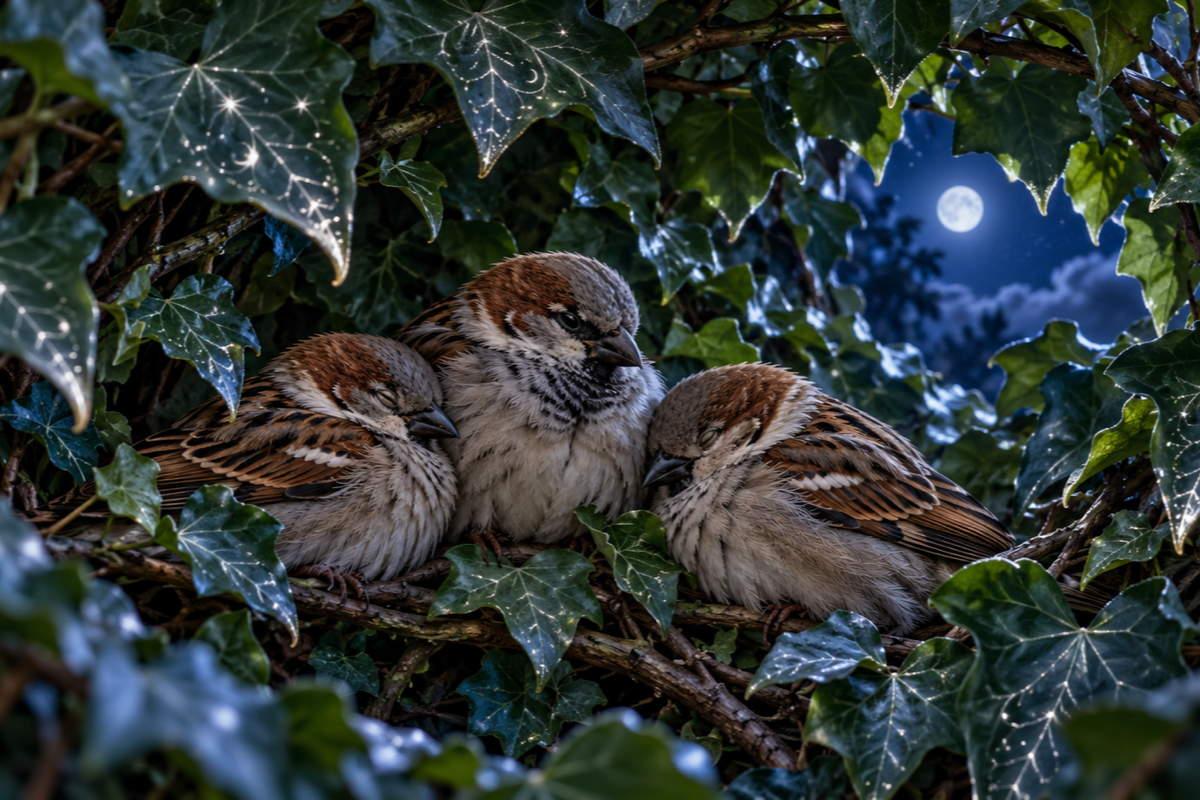
One minute there is a bird on the fence. A few minutes later, the fence is empty, the last calls have faded, and the garden seems to have closed for the evening.
Where did everyone go?
For many garden birds, the answer is somewhere close but difficult to see: inside dense foliage, against a sheltered branch, or within a tree cavity. The place a bird settles to rest is called a roost. Learning a little about it changes how you look at the hedge that appears to do nothing after sunset.
First, Put the Nest Picture Aside
The image is familiar: a small bird tucked into a round nest, sleeping beneath the stars. It is a charming illustration, but it does not describe the usual sleeping arrangements of many adult garden birds outside the breeding season.
Nests primarily serve reproduction, providing a place for eggs and young. A bird's resting place at other times may be quite different. Some species do use nests or nest boxes for shelter, so there are exceptions; the important point is that a nest is not every bird's permanent bedroom.
Think of roosting as a choice shaped by the bird's needs and the places available. The suitable spot for a woodpecker may look very different from the one used by a sparrow.
Three Places to Imagine After Dusk
Within a dense hedge
From the outside, a thick hedge may seem like one solid surface. Inside, there are branches, gaps, and layers of cover. For some birds, this offers a sheltered place to settle.
The RSPB's advice on helping birds through cold weather includes dense hedges and plants such as ivy and holly as places where birds can roost and shelter. Which plants suit your garden depends on your region, but the underlying need is useful to recognize: birds need cover as well as food.
A feeder in an open yard offers one resource. Nearby vegetation may offer another that becomes particularly important when the feeding stops.
Inside a tree cavity
A small opening in a trunk can lead to a protected space used by a cavity-roosting bird. Some species also use suitable nest boxes outside the nesting season.
Cornell's All About Birds account of winter survival describes woodpeckers returning to the same roost hole repeatedly. That familiar cavity can be part of a bird's daily routine even when we only notice its daytime visits.
An opening is worth observing from a distance, but avoid looking inside or approaching to find out whether it is occupied. The bird benefits from being able to enter and rest undisturbed.
Among other birds
Some species gather in communal roosts. The scale can range from a small group to a large evening assembly, depending on the birds and the location.
The same Cornell account describes crows gathering in large winter roosts. A gathering like that serves a different pattern of life from a single bird disappearing into a hole in a tree.
There is no single arrangement that all garden birds share. Even within one neighborhood, several kinds of resting places may be in use at once.
What Makes a Sleeping Place Useful?
A roost needs to work through hours when a bird is resting rather than actively searching for food. Shelter from weather, concealment, and access all influence how useful a place may be.
Cold nights also make energy important. Birds have insulating feathers, and maintaining body warmth can require energy through the night. The US Fish and Wildlife Service explains how feathers and sheltered spaces help birds in winter.
This gives a dense shrub or tree cavity a practical significance that is easy to miss in daylight. It is part of the habitat supporting a bird between the activities we enjoy watching.
You can see a similar connection between appearance and usefulness in The Beauty of Seed Heads in Late-Summer Gardens. A garden feature can keep providing something valuable after its most noticeable season has passed.
Watch the Approach, Then Let the Birds Settle
The most rewarding way to learn about roosting is often to watch the transition into evening.
Choose a comfortable position with a clear view of the garden and stay there as daylight fades. Notice whether birds make repeated trips toward one area. Listen for calls from inside foliage. Look for a final movement into a hedge or toward a familiar tree.
Treat these observations as clues. A bird entering a shrub once does not prove it will sleep there, and a brief visit to a box does not tell you everything about how the box is being used.
Once birds have settled, give them privacy. Avoid shining a torch into cover, playing calls to draw them out, or moving closer for a photograph. You can learn plenty from where the movement ends without seeing the sleeping bird itself.
If your household enjoys watching together, make a simple evening note: the time, the weather, and the last place you saw a particular bird. Compare several evenings without trying to force a pattern from a single visit.
Look at the Garden Between Visiting Hours
It is natural to judge a bird-friendly garden by how many birds appear while we are watching. Roosting asks us to consider the hours we miss.
When planning changes, notice which shrubs, hedges, or trees offer substantial cover. If you are considering a box, look for advice suited to local species and conditions. Check for bird activity before maintenance, and arrange work so occupied resting places can be left undisturbed.
You do not need to locate every roost. Simply recognizing that a quiet corner may have an evening purpose can lead to more thoughtful decisions about it.
Tomorrow, the birds may reappear on the same fence, apparently arriving from nowhere. Your article on why birds sing at dawn explores that more audible part of their day. Between the last evening movement and the first morning call lies another part of their lives, much of it taking place quietly within the garden you already know.