Why Birds Sing at Dawn and What the Morning Chorus Really Means
Discover why birds sing at dawn, what the morning chorus means, and how birds use song for territory, mating, and daily communication.
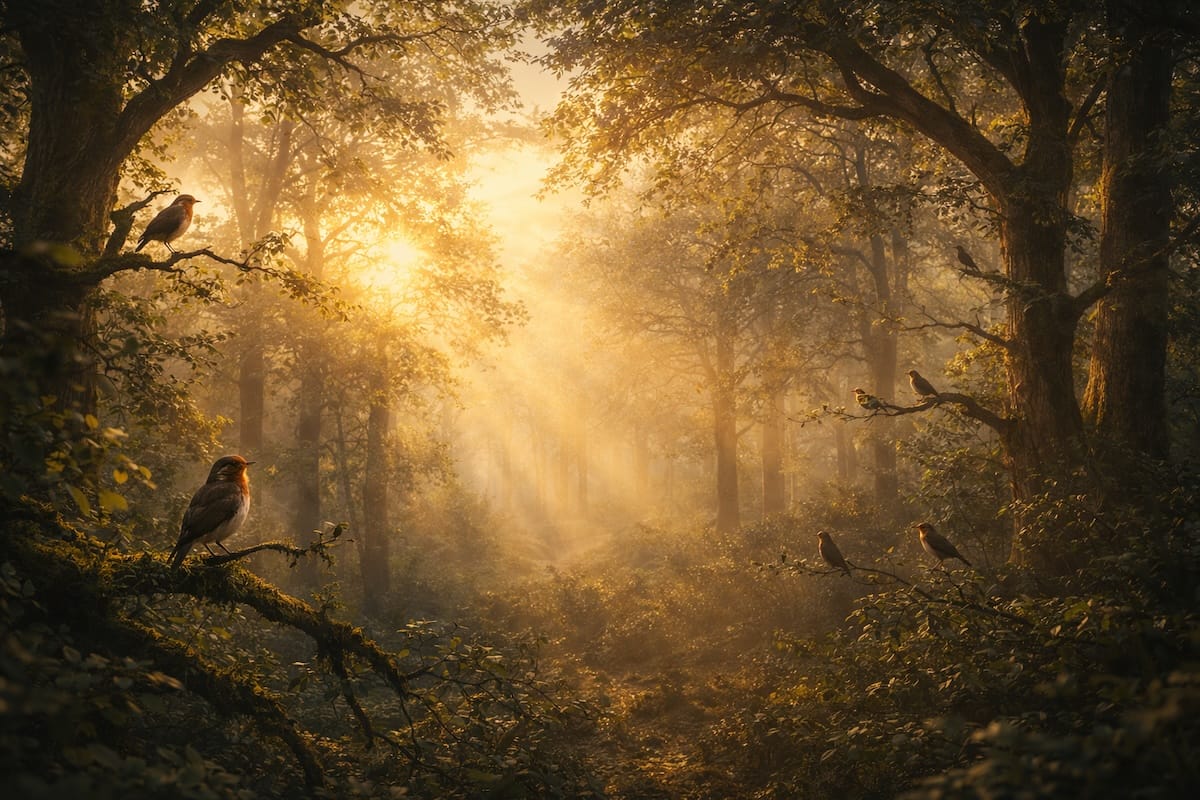
If you have ever stepped outside just after sunrise and heard the trees bursting with birdsong, you have already experienced one of the most beautiful daily events in nature.
The sound can feel almost theatrical. One bird begins, then another answers. Before long, the air is full of whistles, trills, chirps, and layered calls that seem far louder and fuller than anything heard later in the day. Even people who do not know many bird species can usually recognize that moment. It feels different from ordinary daytime noise. It feels like the world is waking up out loud.
This phenomenon is often called the morning chorus or dawn chorus, and it happens in many parts of the world during the breeding season. But while it may sound like a joyful welcome to the day, birds are not singing simply because the sunrise is pretty.
They are communicating.
Birdsong at dawn is tied to territory, mating, energy, visibility, and daily rhythm. It is one of the clearest examples of how wildlife uses sound with purpose. And like many of nature's most memorable patterns, it becomes even more interesting once we understand what is happening beneath the beauty.
If you have enjoyed posts like The Language of Weather: How Animals Predict What We Miss or The Moon and the Migration: How Light Guides Wildlife, the dawn chorus belongs in that same world of subtle signals and natural timing.
What Is the Dawn Chorus?
The dawn chorus is the burst of bird vocal activity that happens in the early morning, usually around first light and shortly after sunrise.
It is most noticeable in spring and early summer, when many birds are breeding, defending territory, and searching for mates. During this time, song becomes especially important. A bird's voice is not just background sound. It is part of how that bird survives and succeeds.
Not every bird sings in exactly the same way or at the same time. Some species begin before sunrise, while others join in later as the sky brightens. This creates the layered effect many people notice in the morning. The chorus builds gradually rather than arriving all at once.
And although the sound may feel spontaneous, it is anything but random.
Why Birds Sing Most at Dawn
There are several reasons birds are especially vocal early in the morning.
1. Dawn is ideal for communication
In the early morning, the air is often cooler, calmer, and less noisy than it is later in the day. Wind tends to be lighter. Human activity is lower. Insects, traffic, and general daytime movement have not yet filled the environment with competing sound.
That means birdsong can travel more clearly.
For a bird trying to announce its territory or attract a mate, dawn offers some of the best acoustic conditions of the day.
2. Birds have not started feeding yet
Many birds begin singing before they fully switch into daytime feeding behavior. In low light, it may be harder to forage efficiently, especially for species that rely on vision to locate food. Singing becomes a useful way to spend that early period before full daylight improves feeding conditions.
So in a sense, dawn is a window of time when communication takes priority.
3. The breeding season makes song more important
During spring and early summer, birds are under pressure to secure nesting space, defend territory, and attract mates. Song helps with all three.
A strong dawn performance may help a male bird signal that he is healthy, alert, and able to hold territory. For nearby rivals, the message is clear: this space is occupied. For potential mates, the song may serve as proof of fitness.
Are Birds Singing for Mates or Territory?
Usually both.
Birdsong serves more than one purpose, and the meaning often depends on the situation and species.
In many songbirds, a male sings to let other males know that an area is already claimed. That helps reduce physical conflict. Instead of fighting constantly, birds can often settle boundaries through vocal display.
At the same time, song can also attract females. In some species, females may prefer males with stronger, more complex, or more persistent songs. A well-timed dawn chorus can therefore be part of courtship as well as competition.
That is one of the reasons morning birdsong feels so lively. It is not a single message. It is many messages happening at once across the landscape.
Why Different Birds Start Singing at Different Times
If you listen carefully, you may notice that some birds seem to wake up earlier than others.
This is not your imagination.
Different species often join the dawn chorus at different times, and scientists believe this may be linked to several factors:
- how well a species can function in low light
- where that bird usually sings from
- what type of song it uses
- how important early vocal signaling is for that species
Birds with larger eyes may be able to operate earlier in dim conditions. Others may wait until there is enough light to move safely or forage effectively. Some species also benefit from singing first, especially if early calling helps establish presence before competitors become active.
The result is a chorus with structure. It may sound like a beautiful crowd, but it is really more like a timed sequence.
Why Birds Sing Less Later in the Day
If the morning chorus is so useful, why do many birds become quieter as the day goes on?
Part of the answer is simple: once the key messages have been delivered, birds need to focus on other tasks.
Feeding, nest building, chick care, predator awareness, and energy conservation all become important during the day. Singing takes time and energy. It also makes a bird noticeable.
By later morning or afternoon, a bird may have less need to keep singing constantly, especially if territory has already been established and a mate has already been attracted.
That is why the dawn chorus feels so special. It is a peak moment, not an all-day event.
Do Only Male Birds Sing?
In many species, male birds are the most frequent singers, especially in regions where song is strongly tied to breeding behavior and territorial display.
But not all birdsong comes from males alone.
In some species, females also sing. In others, both sexes call, duet, or communicate in more subtle ways. The exact pattern depends on the species and region. Bird behavior is wonderfully varied, and the more we study it, the more complexity we tend to find.
This is a helpful reminder that even familiar natural sounds can contain far more detail than we first assume.
Why the Dawn Chorus Sounds So Emotional to Humans
Even though birds are singing for their own reasons, human beings tend to respond to the dawn chorus emotionally.
Part of that comes from timing. Morning already carries symbolic weight for people. It suggests beginning, possibility, freshness, and return. When birds fill that moment with sound, it deepens the feeling.
Part of it also comes from contrast.
Birdsong at dawn often arrives before the rest of the world gets loud. That makes it feel intimate. It belongs to the margin between night and day, when things are quieter and attention is softer.
This may be one reason birdsong has appeared so often in poetry, folklore, prayer, and seasonal tradition. It feels meaningful even before we fully understand why.
If you enjoy that meeting point between emotion and ecology, you might also like The Quiet Night: What Wildlife Is Doing While We Celebrate Christmas Eve or The Long Way Home: Animals That Travel Ridiculous Distances.
What the Dawn Chorus Tells Us About Bird Health
A healthy morning chorus can also tell us something about the environment.
When a place supports a variety of singing birds, it usually means that habitat, food, nesting space, and seasonal timing are lining up well enough for those species to thrive. Woodlands, gardens, hedgerows, wetlands, and parks with strong bird activity often reflect broader ecological health too.
On the other hand, when bird populations decline, one of the first things people notice is silence.
That silence matters.
It reminds us that birdsong is not just a pleasant extra. It is part of how ecosystems express life. Losing it changes the emotional quality of a place, but it also signals a deeper ecological shift.
How to Hear More Birds in the Morning
If you want to enjoy the dawn chorus more often, the best approach is wonderfully simple:
- go outside early
- stay still for a few minutes
- listen before looking
- visit places with trees, shrubs, or water nearby
- return to the same place across several mornings
The more often you listen, the more patterns you begin to notice.
At first, the chorus may sound like one beautiful wave of noise. Over time, you may start hearing individuals, repeated phrases, pauses, and response patterns. What seemed blended begins to separate into voices.
That kind of attention makes the experience even richer.
If your interest in nature observation keeps growing, you may also enjoy exploring the site's Wildlife & Nature section for more posts in this same spirit.
A Daily Concert With a Purpose
The dawn chorus is one of the easiest wildlife wonders to experience, and one of the easiest to take for granted.
Because it happens so often, many people stop noticing how remarkable it really is. Yet every morning chorus is a living network of messages traveling through cool air at the start of a new day. Birds are defending territory, attracting mates, marking presence, and responding to one another in real time.
What sounds to us like beauty is also strategy.
What feels peaceful is also purposeful.
And somehow, that makes the whole thing even better.
The next time you hear birds singing just after sunrise, pause for a moment before the day rushes in. That layered sound is not only a lovely part of morning. It is a sign that the landscape is alive with communication.
In a world full of noise, that kind of meaningful sound feels worth paying attention to.