Why Fireflies Glow: The Real Science Behind Nature's Tiny Lanterns
Discover why fireflies glow, how bioluminescence works, and why these tiny nighttime lights matter for healthy habitats and dark skies.
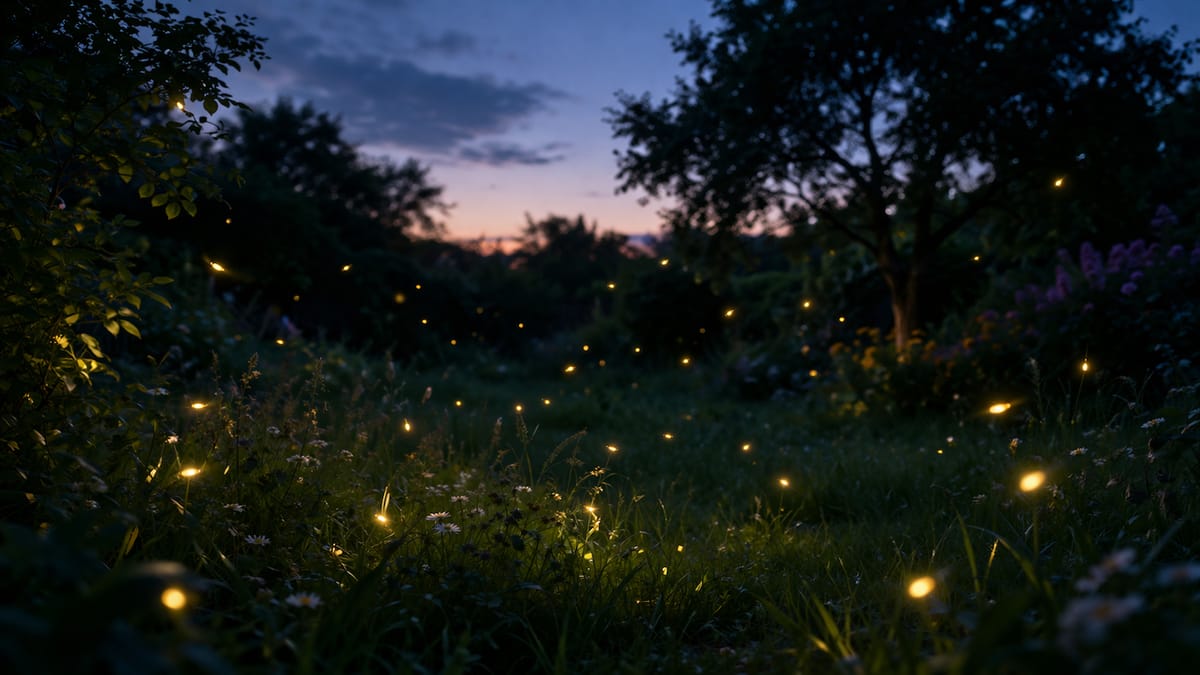
Few summer sights are more unforgettable than fireflies in a dark garden.
One moment the evening feels still and ordinary. The next, tiny lights begin to rise from the grass like drifting sparks. It is easy to understand why so many people associate fireflies with wonder and childhood. They do not just light up a yard. They change the mood of it.
What makes fireflies especially fascinating is that their glow is not just beautiful. It is useful.
Fireflies produce light for reasons tied to survival, communication, and reproduction. Their flashing patterns help them find mates, identify their own species, and in some cases warn predators to stay away. In other words, the soft blinking we enjoy on summer nights is actually part of a highly specific natural system.
That is what makes them special. The science behind fireflies does not take away their magic. It reveals a deeper kind of wonder inside it.
If you have enjoyed the site's other nature-centered posts like The Secret Lives of Fireflies or The Moon and the Migration: How Light Guides Wildlife, this topic fits naturally into that same world of quiet marvels.
Fireflies Are Beetles, Not Flies
Despite their name, fireflies are not actually flies.
They are beetles from the family Lampyridae. There are many different species, and they vary in size, flash pattern, habitat, and behavior. Some are common in meadows and gardens. Others prefer wetter areas, woodland edges, or marshy ground.
Most of us notice fireflies only in their adult stage, but that is a short part of their life cycle. Fireflies spend much of their lives as larvae, living in soil, leaf litter, or damp ground. During that stage, they feed on soft-bodied prey such as snails and slugs.
By the time we see them glowing at dusk, they are already in the final visible chapter of a much longer story.
Why Fireflies Glow
The main reason adult fireflies glow is communication.
Their light acts as a signal, especially during mating season. In many species, males fly through the evening flashing in a species-specific pattern. Females watch from plants or grasses below and answer with their own timed response. If the pattern and timing match, the male knows he has found the right kind of mate.
This means a firefly's blinking is not random decoration. It is a language made of light.
Some species use longer flashes. Others use short pulses. Some stay low to the ground, while others drift higher through the air. Each pattern helps reduce confusion where several species live close together.
Firefly light can also serve as a warning.
Many fireflies contain defensive chemicals that make them unpleasant to predators. Their glow may act as a signal that says, in effect, "I am not a good meal." So even their beauty has a practical purpose.
How Fireflies Make Light
Firefly light is called bioluminescence.
Inside the lower part of a firefly's abdomen, a chemical called luciferin reacts with oxygen. This reaction is helped by an enzyme called luciferase and powered by energy stored in the insect's cells. When the reaction happens, light is produced.
One of the most remarkable details is how efficient this process is.
Unlike an old-fashioned light bulb, which gives off a lot of heat, firefly light is extremely efficient and produces very little wasted heat. That is why it is often called a "cold light."
This natural efficiency has fascinated scientists for years. Firefly chemistry has even been used in scientific research, including laboratory tests that track biological activity.
So the same light that delights children on a summer walk has also helped expand human understanding in medicine and biology. That is a lovely reminder that beauty and usefulness often live side by side in nature.
Why Fireflies Flash in Different Patterns
If you watch fireflies closely, you will notice they do not all blink the same way.
That difference matters.
Each species tends to have its own flash signature. The length of the flash, the timing between pulses, the height of flight, and the time of evening when a species is active all help fireflies find the right mates.
This is important because many species can share the same general habitat. A meadow, wetland edge, or garden might host multiple species at once. Their different patterns reduce confusion and keep communication clear.
In some places, certain fireflies even synchronize their flashes in groups, creating waves of light that pulse through the landscape. It is one of the most extraordinary wildlife displays in the world.
If you enjoy how nature can feel almost story-like, you might also like The Language of Weather: How Animals Predict What We Miss, which explores another side of how wildlife reads signals humans often overlook.
Where Fireflies Live Best
Fireflies do best in places that still offer moisture, shelter, and darkness.
Healthy firefly habitat often includes:
- leaf litter
- tall grass or meadow edges
- damp soil
- native plants
- nearby water or seasonal moisture
- low levels of artificial nighttime light
Because fireflies spend so much of their lives as larvae in the ground, they need more than a pretty lawn. They need a functioning ecosystem.
This is one reason they are often more common in places that feel a bit softer and less controlled. Overly tidy landscapes can remove the moisture, cover, and prey that fireflies need in order to survive.
Why Fireflies Are Disappearing
In many places, people remember seeing far more fireflies when they were younger.
That decline is not just nostalgia. In some areas, firefly numbers really have dropped, and there are several likely reasons.
1. Habitat loss
When meadows disappear, wetlands are drained, and natural yard spaces are replaced with pavement or heavily managed landscaping, fireflies lose the conditions they depend on.
2. Light pollution
This is one of the biggest challenges for fireflies. Since they rely on visible light signals to communicate, bright outdoor lighting can interfere with courtship.
3. Pesticide use
Chemical treatments can harm both adult fireflies and their larvae, while also reducing the small creatures the larvae feed on.
4. Changing weather patterns
Shifts in rainfall, seasonal timing, and temperature can affect moisture levels and breeding conditions, especially for species with narrow habitat needs.
When we lose fireflies, we are usually losing more than one insect. We are seeing signs that the nighttime health of an ecosystem is changing.
How to Make Your Yard More Firefly-Friendly
The encouraging part of this story is that many firefly-friendly choices are simple.
If you want to support fireflies, try:
- leaving some leaf litter in garden beds
- reducing pesticide use
- planting native vegetation
- letting part of the yard stay a little wild
- keeping damp areas from drying out too quickly
- turning off unnecessary outdoor lights at night
These changes do not just help fireflies. They also support birds, pollinators, frogs, and other forms of local wildlife.
Fireflies are part of a wider web of life, and protecting them often means protecting the small ecological details that many species depend on.
Why Fireflies Matter Beyond Beauty
It is easy to dismiss fireflies as simply pretty insects, but they are more than that.
They help us notice that darkness itself is part of nature. In modern life, we often treat brightness as normal and constant. Fireflies remind us that some forms of life need darkness in order to communicate, breed, and survive.
They also remind us that small creatures can carry enormous emotional weight. People who do not know the names of local beetles or birds still care deeply when fireflies disappear. That emotional connection is valuable. It creates a bridge between everyday life and conservation.
And perhaps most importantly, fireflies show us that science and wonder belong together.
If you are drawn to that same meeting point between enchantment and ecology, you may also enjoy Nature's Nightlights: The Folklore and Science of Bioluminescence and The Quiet Night: What Wildlife Is Doing While We Celebrate Christmas Eve.
A Small Light Worth Protecting
The next time you see fireflies in the evening, pause for a moment.
What looks like a tiny floating lantern is actually a living message shaped by chemistry, instinct, timing, and habitat.
That is what makes fireflies so memorable. They are delicate, precise, nostalgic, and scientifically astonishing. They belong equally to memory and ecology.
And perhaps that is why people love them so much.
Fireflies make the natural world feel personal. They invite us to slow down, look more carefully, and value beauty that does not demand attention but quietly earns it.
If we want to keep seeing those summer lights, we need to protect the conditions that allow them to exist: darker nights, healthier habitats, gentler gardens, and landscapes with room for small living wonders.
That feels like a very worthwhile promise to make to summer.