Why Moths Belong in the Night Garden
Learn why moths matter in the night garden, from pollination and food webs to the quiet beauty they bring to summer evenings.
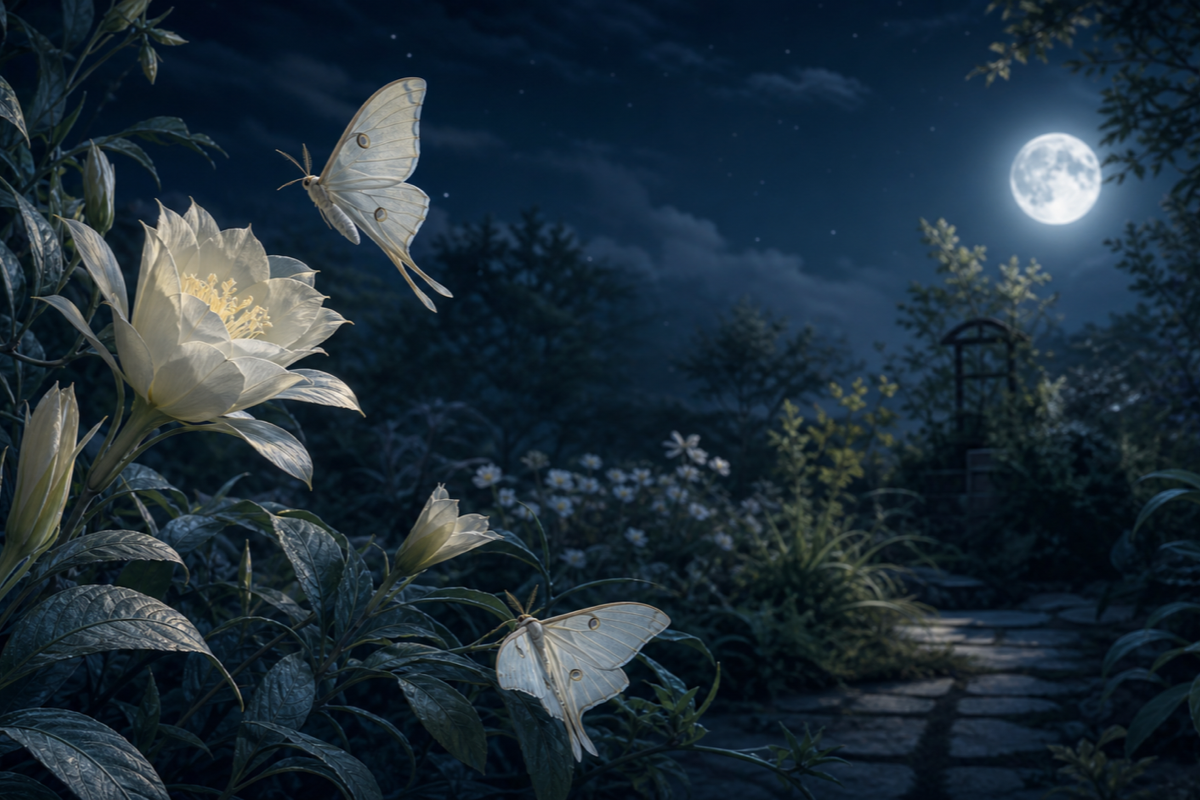
Moths deserve better than their reputation.
They are often treated as the less interesting relatives of butterflies, noticed mainly when they flutter toward light or appear unexpectedly indoors. But in the natural world, moths are remarkable creatures. They pollinate flowers, feed birds and bats, move through the night garden with quiet purpose, and carry a kind of beauty that is easier to miss only because it belongs to darker hours.
Once you start paying attention, moths begin to seem much more than background insects.
They are part of what makes summer evenings feel alive.
They visit pale blooms, respond to scent, and move through moonlit or shaded spaces with a softness that is very different from the bright openness of daytime pollinators. If butterflies belong to sunshine, moths often belong to atmosphere.
If you have enjoyed posts like The Secret Lives of Fireflies or The Quiet Night: What Wildlife Is Doing While We Celebrate Christmas Eve, moths belong beautifully in that same world of quiet nighttime wonder.
Moths Are Important Pollinators
One of the most overlooked facts about moths is that many of them help pollinate plants.
As they visit flowers for nectar, they carry pollen from bloom to bloom, often during hours when bees and butterflies are no longer active. This means moths help extend the pollination work of a garden or wild habitat into the evening and night.
Some plants are especially suited to this partnership.
Pale flowers, evening fragrance, and blooms that open or become more expressive after dark often attract moths particularly well. In that sense, moths are essential companions to night-blooming flowers and moon gardens.
They Belong to the Night Garden
Moths change the personality of a garden after dark.
By day, the pollinator world may seem to belong to bees, butterflies, and visible movement in sunlight. At night, the rhythm changes. Fragrance becomes stronger. Pale flowers stand out more clearly. Air cools. And moths begin moving through the garden with a quieter, softer kind of energy.
This shift matters because it reminds us that gardens do not stop functioning when the sun goes down.
They simply change staff.
Moths are part of that evening workforce, carrying ecological importance into hours many people rarely think about.
Moths Are More Beautiful Than People Expect
Part of the unfairness in how moths are perceived comes from familiarity and lighting.
Many moths are patterned with soft browns, silvers, creams, subtle stripes, and velvety textures that do not immediately stand out unless you look closely. But once you do, they can be astonishingly elegant. Some are shaped like leaves or bark. Others have delicate markings that seem almost painted. Some large species are as visually striking as many butterflies.
Their beauty simply asks for a different kind of attention.
It is not bright and obvious. It is nocturnal, textured, and often revealed at the edges of visibility.
That gives moths a kind of mystery butterflies rarely need in order to be admired.
They Help Feed Other Wildlife Too
Moths matter not only for what they do with flowers, but for their place in the food web.
They provide food for bats, birds, and other creatures. This means a healthy moth population supports many forms of life beyond the moths themselves. When moth numbers decline, the effects can ripple outward.
This makes them more important than people often realize.
Small, easily ignored creatures are often doing large ecological work.
Night Fragrance and Pale Flowers Often Belong to Moths
Many flowers that feel magical at dusk or night are well suited to moth pollination.
White or pale blooms are easier to see in low light. Strong evening fragrance helps guide pollinators when visibility drops. This is one reason moon gardens can feel so alive after sunset even when human eyes are seeing less.
Moths are part of the answer.
They move through that scented darkness carrying attention from flower to flower, participating in a relationship that is just as real and important as the daytime one.
If you enjoy that blend of ecology and evening mood, you may also like Petrichor and the Beauty of Rain on Dry Earth and A Restful Nature Walk: How to Make Time Outdoors Feel Calm Again.
Moths Teach Us to Notice the Less Obvious
One of the most interesting things about moths is how strongly they challenge daytime bias.
People tend to notice what is bright, sunny, and easy to admire quickly. Moths belong to another kind of beauty. They invite slower attention. They ask us to value life that does not perform for daylight.
That alone makes them worth appreciating.
A world that includes moths feels fuller than a world noticed only at noon.
The Night Garden Would Feel Emptier Without Them
Imagine a summer evening garden with pale flowers, cooling air, drifting scent, and soft darkness settling across the leaves.
Now imagine it without moths.
The beauty would still exist, but some of the life inside it would be missing. Moths are part of what makes the night garden a living place rather than a still picture.
They carry movement without noise, work without display, and elegance without insistence.
That is a beautiful contribution.
Small Wings, Quiet Importance
Moths belong in the night garden because the night garden is part of the real ecological world, not only the imaginary one. It needs pollinators, movement, food webs, and creatures adapted to hours when people are less likely to notice.
Moths provide all of that.
They may never be as immediately celebrated as butterflies, but they deserve much more affection than they usually receive.
The next time one flickers through evening light or drifts near pale flowers, it may be worth seeing it differently. Not as a lesser daytime creature, but as one of the beings that helps make nighttime beauty alive.