How Frogs Tell Us a Wetland Is Alive
Learn how frogs reveal the health of wetlands, ponds, and marshes, and why their evening chorus means more than many people realize.
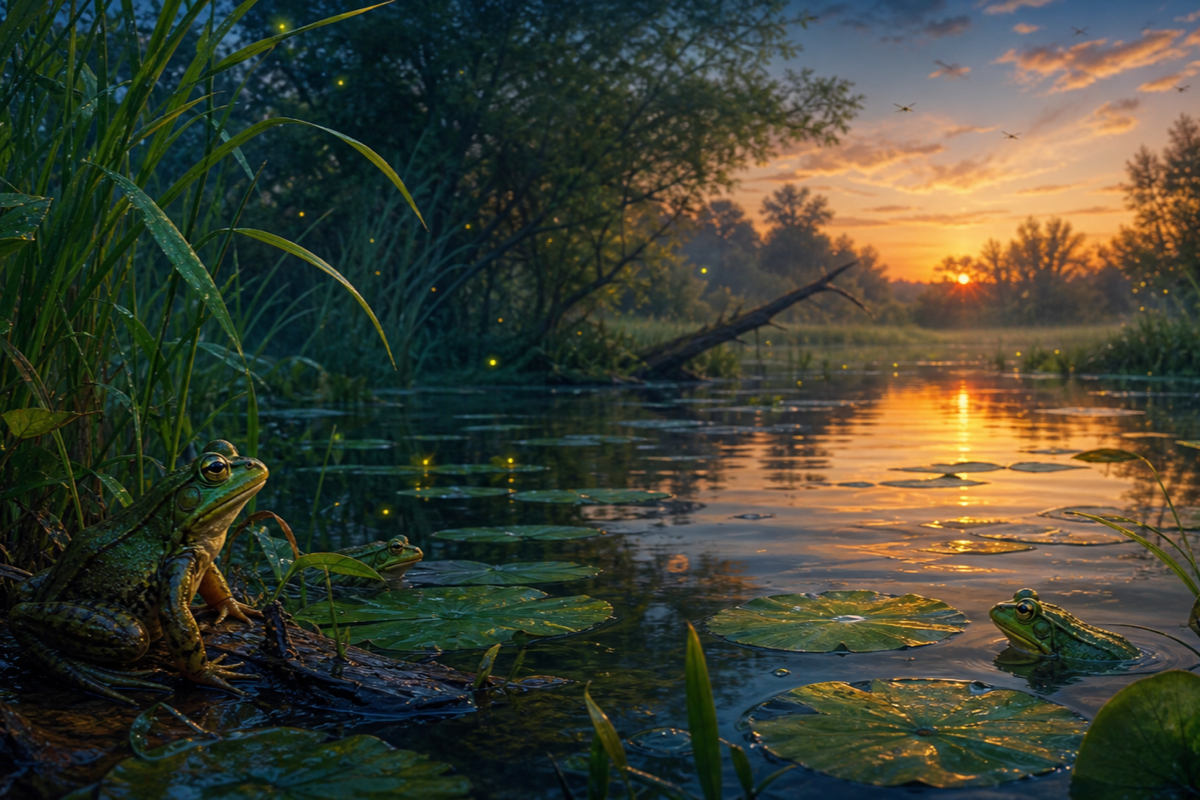
Frogs are easy to underestimate.
They are small, often hidden, and more often heard than seen. On a humid evening near water, their calls can fill the landscape so completely that the whole place seems alive with sound. Yet many people know very little about what frogs are actually telling us when they appear.
In ecological terms, frogs matter far more than their size suggests.
They are sensitive to changes in water quality, habitat health, and environmental balance. Their presence can reveal a great deal about the condition of wetlands, ponds, marsh edges, and other damp ecosystems. When frogs are active and breeding, it often means the surrounding habitat is still offering the moisture, plant life, shelter, and seasonal rhythm they need.
That makes frogs more than charming summer voices.
They are also indicators.
If you have enjoyed wildlife posts like How Bees Find Flowers and Why Their Work Matters So Much or How Butterflies Find Flowers Using Color, Scent, and Sunlight, frogs belong in that same conversation about small creatures carrying larger ecological meaning.
Frogs Depend on Healthy Wet Places
Frogs need moisture in ways many other animals do not.
Their skin is permeable, which means they absorb water and are sensitive to what is in it. They also need access to aquatic or damp environments for breeding. Many species lay eggs in water, and the tadpole stage depends on aquatic conditions before the young frogs can move more freely on land.
Because of this, frogs are closely tied to wetland health.
If a pond dries too severely, becomes polluted, loses surrounding plant cover, or stops supporting the seasonal cycles frogs depend on, frog populations often struggle quickly. This is why their presence can be so informative. A place that supports frogs is usually doing several important things right at once.
Their Calls Mean More Than Summer Atmosphere
Frog calls are one of the defining sounds of warm evenings near water, but they are not just pleasant background music.
These calls are usually part of breeding behavior. Male frogs call to attract females and signal their presence to others. Different species have different calls, which is why a wetland chorus can sound layered and textured rather than uniform.
To human ears, the sound may feel atmospheric or even magical.
To frogs, it is communication shaped by season, temperature, and reproduction.
This matters because a lively evening chorus often means breeding conditions are active. Water is present. Temperatures are suitable. Habitat is functioning well enough for the frogs to continue their cycle of life.
Frogs Help Show Whether Water Is Still Healthy
Because frogs interact so closely with water, they are often among the first animals to be affected when an aquatic habitat becomes unhealthy.
Pollution, pesticide runoff, habitat destruction, and severe shifts in water levels can all affect them. Since their eggs and young are often especially vulnerable, problems in a wetland can show up in frog populations relatively quickly.
That sensitivity makes frogs valuable indicators.
They do not tell us everything about an ecosystem, of course, but they do tell us something important: whether conditions are still gentle enough for delicate life stages to continue.
When frogs disappear from places where they used to thrive, it is often a sign that the environment has changed in ways worth paying attention to.
Wetlands Need More Than Water Alone
It is easy to imagine that a wetland is healthy simply because it is wet.
But frogs remind us that water alone is not enough. A functioning wetland also needs plant life, shelter, insects, seasonal balance, and space for different life stages to unfold.
Frogs need:
- clean enough water for eggs and tadpoles
- vegetation for cover
- insect life for food
- damp ground or nearby habitat for adult movement
- seasonal stability long enough for breeding success
When all of those things are present together, a wetland becomes more than a puddle or a marshy patch. It becomes a living system.
Frogs Are Part of a Larger Food Web
Frogs matter not only for what they tell us, but for what they do inside the ecosystem.
They eat insects and other small prey, helping shape populations that might otherwise grow unchecked. At the same time, frogs themselves become food for birds, snakes, fish, and other wildlife.
This makes them an important middle point in the food web.
When frog populations are healthy, they help maintain balance in both directions: controlling prey and feeding predators.
That kind of ecological role is easy to miss precisely because frogs are small and often hidden. But quiet creatures often do essential work.
Their Life Cycle Connects Water and Land
One of the most fascinating things about frogs is that their life cycle connects two worlds.
They begin in water as eggs and tadpoles, then move into more land-based life as adults. That means frogs link aquatic systems and nearby terrestrial habitats in a very direct way.
This connection makes them especially useful as indicators. They reveal not only whether the water itself is working, but whether the surrounding edges, the damp soil, the plant cover, and the broader habitat network are functioning too.
Wetlands are rarely isolated systems. Frogs help make that visible.
Frogs and the Emotional Sound of Summer
Beyond science, frogs also matter because of how strongly they shape the emotional experience of place.
A wetland with frogs feels different from a silent one.
An evening pond with chorus frogs or tree frogs seems more alive, more inhabited, and more seasonally complete. Their calls give depth to dusk in the same way cicadas give depth to hot afternoons and birdsong gives depth to early morning.
This is one reason people become attached to frog sounds even if they know little about the animals themselves. Sound changes atmosphere. It makes ecological health emotionally legible.
If you enjoy that connection between sound and season, you may also like Why Birds Sing at Dawn and What the Morning Chorus Really Means and If the Wind Had a Personality: How Each Season Would Sound.
Why Frog Decline Matters
Frog decline is a serious concern in many parts of the world.
Because frogs are so sensitive to environmental stress, they are often vulnerable to pollution, habitat fragmentation, disease, climate shifts, and changes in water availability. When frog numbers fall, the loss is not only about one animal group. It often points to larger ecological problems.
That is why paying attention to frogs is so useful. They can help us notice trouble earlier than we otherwise might.
Sometimes the health of a place is easier to hear than to measure.
Small Voices, Big Meaning
Frogs tell us a wetland is alive because they depend on so many parts of that wetland being healthy at once. Clean water, plant cover, insect life, seasonal stability, and safe breeding space all need to work together for frogs to thrive.
Their calls may seem simple.
Their ecological message is not.
The next time you hear frogs at the edge of a pond or marsh on a warm evening, it may be worth listening a little differently. Beneath that chorus is a sign that the water, the plants, the insects, and the season are still holding together well enough to support fragile living things.
That is a beautiful kind of proof.