What a Shade Garden Teaches Us About Slowing Down
Discover how a shade garden changes the pace of summer, and why softer light, cooler air, and deeper greens can make outdoor beauty feel more restful.
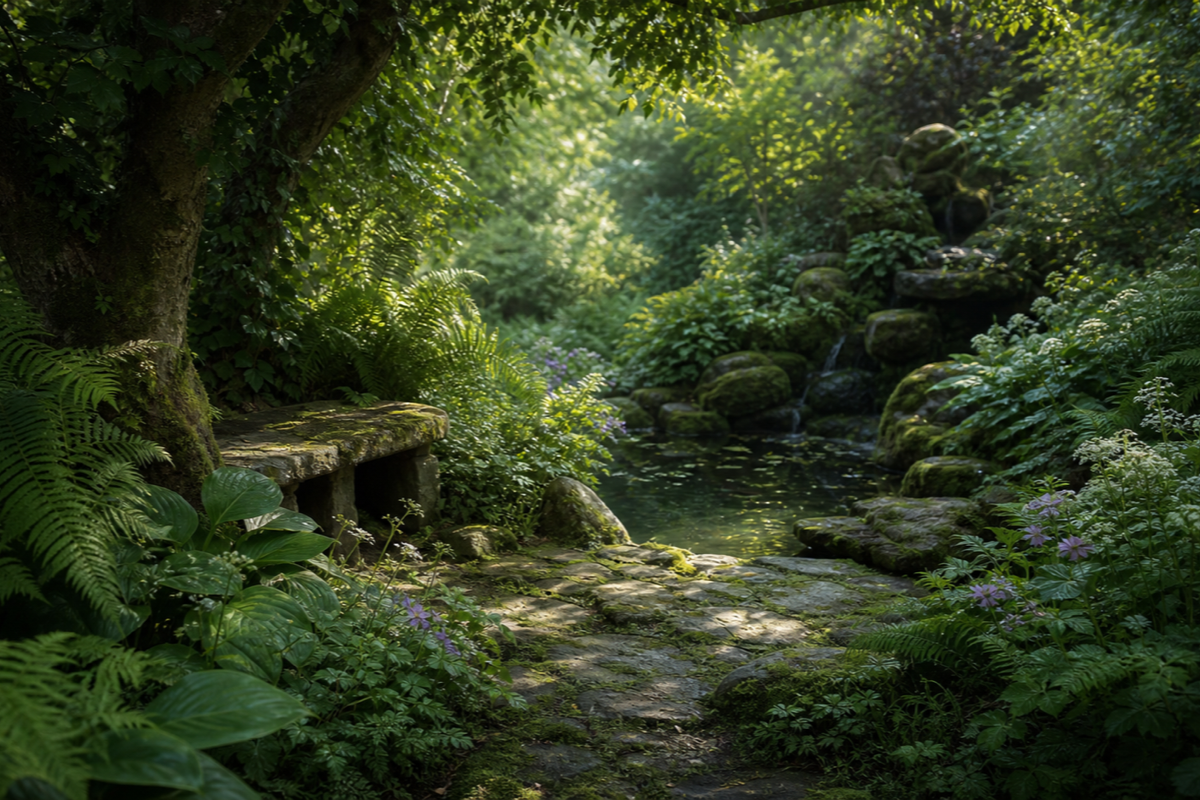
There is a kind of calm that belongs especially to shaded gardens.
It is not the bright, energetic beauty of sunlit borders full of summer color. It is quieter than that. A shady garden softens things. Light arrives filtered through leaves. Heat eases. Greens deepen. The air feels more private, more breathable, and often more reflective.
This is one reason shaded gardens can feel so restorative.
They are places where the pace of summer changes. What might feel intense in full sun often becomes gentler under trees or along cooler borders. A shade garden does not usually ask to be admired all at once. It invites slower looking. Ferns, moss, layered leaves, pale flowers, and soft paths create an experience based less on brightness and more on texture, stillness, and mood.
If you have enjoyed reflective pieces like A Restful Nature Walk: How to Make Time Outdoors Feel Calm Again or Why Spending Time in Nature Improves Focus, Mood, and Creativity, a shade garden belongs very naturally in that same family of gentler outdoor experience.
Shade Changes the Emotional Tone of a Garden
A garden in full sun and the same garden in shade can feel like two different places.
Sunlit spaces often feel lively, visible, and expansive. Shade changes that tone. It creates enclosure, softness, and a slightly more inward kind of beauty. Colors may become cooler or richer. Shadows create depth. The eye stops racing and starts lingering.
This is one reason shade can feel emotionally helpful.
It does not only lower temperature. It lowers intensity.
In a busy season and an often noisy world, that change matters.
The Light in Shade Rewards Slower Looking
Shade is not the absence of beauty. It is a different way of revealing it.
Filtered light through branches and leaves creates layers instead of broad exposure. A hosta leaf, fern curl, pale hydrangea, or patch of moss can seem more detailed in shade because the eye is not overwhelmed by brightness.
This kind of light often invites a slower kind of attention.
Instead of seeing the garden all at once, you begin to notice it in sections and textures. That makes the experience more intimate.
Green Becomes More Expressive in Shade
One of the most beautiful things about shade gardens is how many shades of green suddenly matter.
In brighter spaces, flowers often dominate attention. In shaded spaces, foliage becomes a main form of beauty. Green is no longer one thing. It becomes silver-green, blue-green, deep green, yellow-green, and mossy green. Leaf shapes begin to matter more. Texture begins to matter more.
This can be surprisingly calming.
The garden feels quieter, but not empty. It feels rich without needing spectacle.
Shade Gives Summer a Place to Breathe
July can be a heavy month in many landscapes.
The heat builds. The light grows harder in the middle of the day. The air can begin to feel demanding rather than inviting. A shaded garden creates relief inside that intensity.
This relief is physical, but it is also emotional.
A cool corner under trees or beside leafy borders often feels like permission to soften. You do not have to hurry in the same way there. The body relaxes differently. Thought relaxes differently.
That is one reason shaded gardens can become favorite places almost without trying. They offer a kind of hospitality the season does not always provide everywhere else.
Small Details Matter More in Shade
Shade tends to make the subtle parts of a garden more visible.
Moist soil after rain, the shape of a fern, a pale bloom against dark leaves, the shine of wet stone, the softness of moss, the pattern of bark, and the light on a curved path all begin to carry more weight.
This is part of why shaded spaces often feel contemplative.
They shift attention from spectacle to detail.
If you enjoy that quieter kind of beauty, you may also like Petrichor and the Beauty of Rain on Dry Earth and Gallery of the Stars, where mood and small visual details matter deeply.
Shade Makes Gardens Feel More Private
Even in a small outdoor space, shade can create privacy.
Overhanging branches, filtered light, deeper foliage, and cooler corners can make a garden feel tucked away even when it is not physically large. This is one reason shaded gardens often feel emotionally protective. They seem to hold a person rather than display them.
That sense of shelter can be very restorative.
It helps explain why reading benches, quiet paths, and reflective pauses belong so naturally in shaded outdoor spaces.
A Different Kind of Summer Beauty
Shade gardens remind us that summer beauty is not only about brightness, flowers, and full sun.
It can also be about stillness, contrast, texture, and relief.
That is an important lesson. It expands what people look for outdoors. Instead of searching only for dramatic bloom, they begin noticing atmosphere. They start valuing cooler corners, deeper greens, and the quiet beauty of places that do not insist on themselves.
Slowing Down Is Easier Where the Garden Is Gentler
People often speak about slowing down as if it were purely a matter of willpower.
But places influence pace.
A noisy, glaring environment encourages one kind of movement. A shaded garden encourages another. The softer light, cooler air, and more intimate scale all make it easier to stop rushing and start noticing.
This is one reason shade gardens are so good at teaching calm. They do not lecture us into stillness. They make stillness feel natural.
A Garden for Rest
A shade garden teaches slowing down because it changes how beauty is received.
It replaces glare with softness.
It replaces urgency with atmosphere.
It replaces spectacle with depth.
In doing so, it reminds us that not all of the most meaningful outdoor spaces are the loudest ones. Some of them are cool, leafy, quiet places where the world seems to have lowered its voice.
And sometimes, that is exactly the kind of garden a person needs.