How Garden Spiders Build Webs and Help the Garden
Learn how garden spiders build their webs, catch insects, and add quiet balance and unexpected beauty to outdoor spaces.
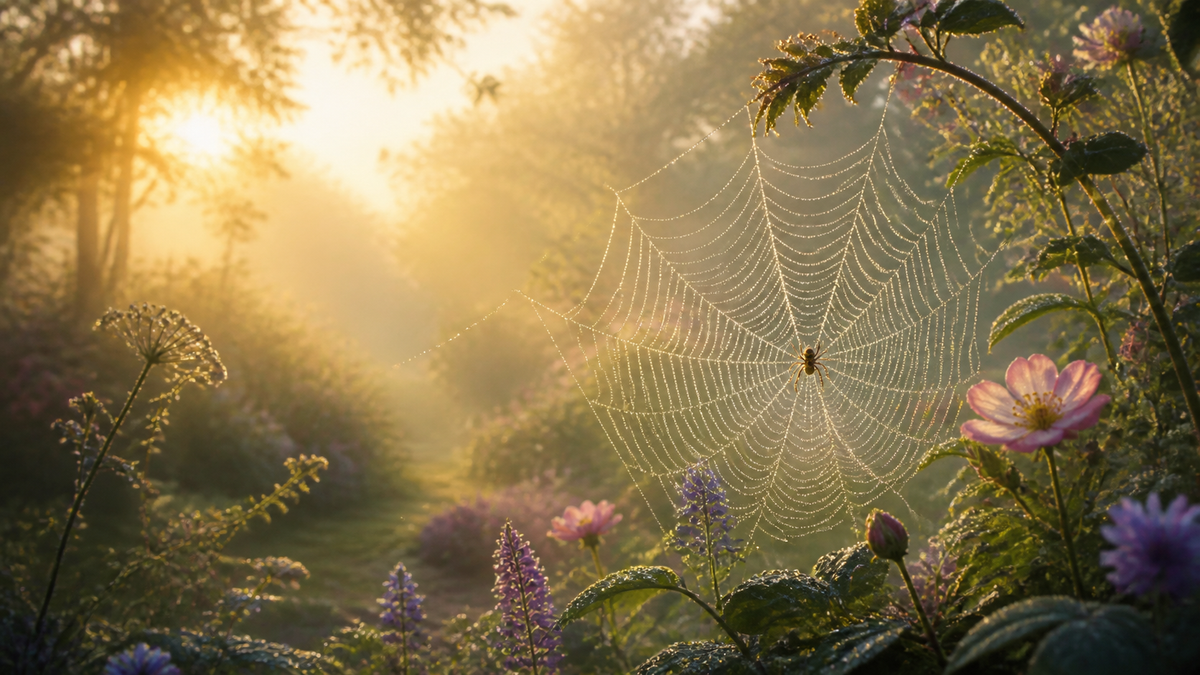
Garden spiders are some of the most useful and misunderstood creatures in outdoor spaces.
People often notice their webs before they notice the spiders themselves. A web stretched between stems at dawn can look almost unreal when it catches dew and early light. It feels delicate, intricate, and a little magical. But behind that beauty is real work. Garden spiders are skilled builders, patient hunters, and quiet helpers in the life of a yard or garden.
That is what makes them worth a closer look.
They are not just interesting because their webs are pretty. They matter because they help shape insect activity, add balance to the garden, and reveal how much intelligence can exist in very small forms of life.
Garden Spiders Are Usually Working, Not Wandering
When people think of spiders, they often imagine something unpredictable running across the floor. Garden spiders are usually doing something much more structured than that.
Many species spend their time building, repairing, waiting, or repositioning webs in places where flying insects are likely to pass. Their lives are tied closely to layout. They pay attention to gaps between branches, flower stems, fences, and corners where movement through the air is consistent.
This is one reason webs often seem so well placed.
They are.
A good web is not random. It is a carefully positioned trap set where food is most likely to arrive.
How Garden Spiders Build Webs
Different spiders build different kinds of webs, but orb-weaving garden spiders are among the most familiar because they create the classic circular design many people picture right away.
The process is remarkable.
A spider first establishes anchor lines, then creates a frame, adds supporting spokes, and finally lays down the sticky spiral that will catch prey. The finished web can look effortless, but it is really a form of small-scale engineering.
What makes it even more impressive is that a web is not permanent. Wind, rain, debris, and successful catches can damage it quickly. Many spiders rebuild often, sometimes daily, depending on the species and the condition of the web.
That means a garden web is not only a structure. It is ongoing labor.
Webs Are Built for a Purpose
A spider web is not just decorative architecture.
It is a food-gathering tool shaped by survival.
The size, spacing, and placement of a web affect what kinds of insects it is likely to catch. A web near flowers may intercept pollinating insects moving through the area. A web near lights, shrubs, or damp corners may catch different prey altogether. Even height matters.
This is one reason spider webs can teach us something about a garden. They often appear where insect traffic is already strong. If a certain corner of the yard keeps attracting webs, it may be because that space is lively with the small movement spiders depend on.
Garden Spiders Help Control Insect Numbers
One of the biggest reasons garden spiders matter is simple: they eat insects.
That does not mean they remove every pest or solve every garden problem. Nature is rarely that neat. But spiders do help reduce populations of many small insects, and that makes them valuable allies in outdoor spaces.
A healthy garden usually includes predators as well as pollinators. Bees, butterflies, and hummingbirds are easier to love immediately, but spiders are part of the same ecological story. They help keep the garden from becoming one-sided. Too much attention on only the beautiful or cheerful creatures gives an incomplete picture of how balance actually works.
If you enjoy seeing those relationships in nature, How Bees Find Flowers and Why Their Work Matters So Much and What Hummingbirds Are Doing in Late-Summer Gardens sit naturally beside this subject.
Their Webs Change the Look of a Garden
Spiders help the garden ecologically, but they also change how it feels visually.
Most of the time, webs are nearly invisible until moisture or angled light reveals them. Then suddenly the air seems full of design. A hedge, trellis, or patch of tall flowers can look transformed by threads that were there all along.
This is one reason spider webs appear so often in nature writing and fantasy imagery.
They make hidden structure visible.
They remind us that a place can contain far more activity and artistry than we first notice.
If you liked the mood of The Quiet Beauty of Summer Mornings in Nature, spider webs belong very naturally in that same early-light world.
Dawn Is the Best Time to Notice Them
If you want to see garden webs properly, morning is often the perfect hour.
Dew collects on silk and makes the structure readable. Low-angle light reveals patterns that disappear later in the day. A web that looked empty the evening before may look like a piece of fine lace after sunrise.
This changes how people respond to spiders.
In harsh indoor settings, a spider may feel like an interruption. Outdoors, in a garden at dawn, the same kind of creature can suddenly seem like an artist.
That shift matters. It reminds us that context shapes affection. Many things in nature become easier to appreciate when seen where they belong.
Not Every Web Means Trouble
People sometimes react to any spider web as if it signals neglect or a problem. In a working garden, that is usually not true.
An outdoor web often means the space is active enough to support predators. It means insects are moving through. It means the garden is part of a living system rather than a static display.
Of course, no one wants webs in every doorway or across every chair. But a reasonable number of spiders outdoors is usually a sign of ecological health, not disorder.
The goal does not need to be total removal. Often it is simply learning the difference between an inconvenient web and a beneficial presence.
Spiders and Wonder Can Belong Together
Part of the charm of garden spiders is that they stand at an interesting intersection.
They are practical and a little mysterious.
They are useful and visually striking.
They can make people uneasy, yet they also create some of the finest patterns found in any garden.
That combination is rare. Many creatures are loved because they are obviously pretty. Spiders earn appreciation more slowly. But once people begin to notice the intelligence in their webs, the steadiness of their work, and the quiet role they play in the larger garden, admiration tends to grow.
A Small Architect in the Garden
Garden spiders matter because they do more than occupy space.
They build.
They hunt.
They help regulate insect life.
They reveal invisible pathways in the air between flowers, stems, and branches.
And every now and then, especially at dawn, they make a garden look briefly enchanted without changing a single plant.
That may be the loveliest thing about them. A spider web is both useful and beautiful at once. It belongs to the real ecology of the garden, but it also feels like something drawn from imagination.
Few creatures bridge those two worlds so gracefully.