What Hummingbirds Are Doing in Late-Summer Gardens
See how hummingbirds feed, compete, and prepare for seasonal movement as late-summer gardens become some of their busiest places.
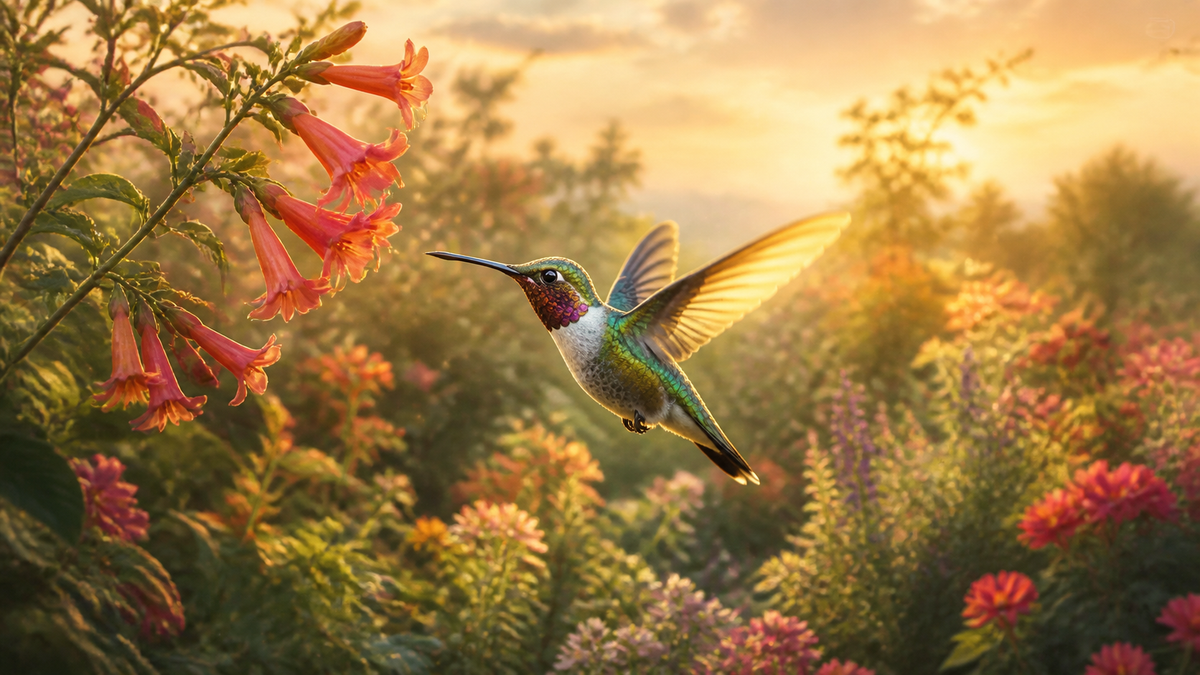
Late summer is one of the most interesting times to watch hummingbirds.
In spring, they feel like bright little arrivals after quieter months. By August, the mood has changed. Flowers are more mature, some blooms are fading, and the garden has a deeper, slightly worn beauty to it. Hummingbirds are still there, but they are not moving through that landscape in quite the same way they did earlier in the season.
They are feeding with purpose, defending good flower patches, and, in many places, preparing for migration. That makes late summer hummingbirds especially fascinating.
If you have ever noticed more hummingbird activity in August and wondered what is happening, the answer is simple: this part of the season matters. A great deal of feeding, movement, and seasonal decision-making is happening in a very small body.
August Is a High-Energy Time for Hummingbirds
Hummingbirds live with intense energy demands all season long, but late summer can raise the stakes.
These birds burn energy quickly. Their wings beat rapidly, their metabolism runs fast, and they need frequent food in order to keep going. Nectar gives them sugar for immediate fuel, and small insects provide protein and other nutrients.
In August, many hummingbirds seem even busier because they often are.
For adults, late summer can be a time of continued feeding after the nesting season, while young birds are also learning how to move through the landscape and find good resources on their own. In areas where migration is approaching, birds may also begin building fat reserves. That means a flower patch or feeder that seemed lightly visited earlier can suddenly become much more active.
This is one reason late-summer hummingbird watching can feel so lively. The birds are not simply decorating the garden. They are working.
Flowers Matter Differently at the End of Summer
Not every part of the garden is equally useful to a hummingbird in August.
By late summer, some early bloomers are gone, some midsummer flowers are at their peak, and others are beginning to slow down. Hummingbirds tend to focus on dependable nectar sources, especially flowers with tubular shapes, strong color contrast, and repeated blooming habits.
Red, orange, pink, and bright coral flowers are often especially attractive, though hummingbirds are not limited to those colors alone. They are looking for energy, and they learn quickly which places offer it reliably.
A patch of bee balm, salvia, trumpet vine, cardinal flower, or other nectar-rich blooms may suddenly become a hummingbird's regular route. If only a few good floral sources remain strong in the heat, those spots can become even more important.
If you enjoy watching how pollinators move through flowers, you may also like How Bees Find Flowers and Why Their Work Matters So Much and How Butterflies Find Flowers Using Color, Scent, and Sunlight.
Territorial Behavior Can Look Dramatic
One thing many people notice in late summer is that hummingbirds can seem surprisingly aggressive.
Two birds may chase each other through the yard. One may return again and again to the same perch. Another may dart in, feed quickly, and vanish. What looks playful is often territorial behavior.
Hummingbirds commonly defend food-rich areas, and that behavior can become especially obvious when floral resources are concentrated. A reliable feeder or blooming section of the garden may be worth guarding because it offers the exact energy a bird needs.
This can make August hummingbirds seem more visible than usual. They are not only feeding. They are also patrolling.
Of course, not every hummingbird behaves the same way. Some individuals are bolder than others, and local resource abundance changes the mood of a place. But if your garden suddenly feels like a tiny airspace with regular disputes, late summer is often the reason.
Migration May Already Be Shaping Their Choices
In many parts of North America, hummingbirds begin migration surprisingly early.
Some species and populations start moving south in late summer, and even birds that are not leaving immediately may already be feeding in ways that support the journey ahead. Migration for such a tiny bird is an extraordinary feat, and it depends on timing, habitat, and access to food along the way.
This is why late-season flowers matter so much.
They are not simply pretty when much of the summer garden is beginning to soften. They may be part of the fuel system that helps a bird continue its seasonal route.
People sometimes worry that seeing hummingbirds in August means the birds are behind schedule. Usually, it means the opposite. They are moving through a normal and important phase of the year. Late-summer presence is part of the story, not a sign that something is wrong.
Feeders Can Help, but Cleanliness Matters
If you keep a hummingbird feeder out in August, it can be especially valuable.
At the same time, warm weather means sugar water spoils more quickly. A feeder that is not cleaned regularly can do more harm than good. Fresh nectar and a clean feeder matter more than having many feeders out at once.
A simple nectar mixture made with plain white sugar and water is the standard choice. Artificial coloring is not needed. In hot weather, frequent cleaning and refilling matter because fermentation and bacterial growth happen faster.
The feeder should support the birds, not create risk.
Thoughtful feeder care helps turn a yard into a better seasonal stop.
Hummingbirds Also Need More Than Nectar
It is easy to think of hummingbirds as creatures of flowers alone, but that is not the full picture.
They also eat tiny insects and spiders, which provide nutrients nectar cannot supply by itself. A garden with ecological variety is more helpful than a garden that offers color alone. Native plants, layered growth, and a less chemically intensive approach can all make the space more supportive.
This matters because hummingbirds do not live on sweetness alone. They live inside a web of small life.
The same garden that supports gnats, small flies, spiders, and other insects may be doing quiet work for hummingbirds too. A little wildness often helps more than excessive tidiness.
What to Notice When You Watch Them
Late-summer hummingbird watching becomes more interesting when you look for patterns instead of only flashes of color.
Notice which flowers they return to most often.
Notice whether they pause on a favorite perch between feeding trips.
Notice whether one bird seems to control a section of the garden.
Notice how activity changes between morning and evening.
These details make the experience richer. A hummingbird is so small and fast that it can seem impossible to study, but repetition reveals a lot. What feels random at first often turns out to be structured.
If you enjoy paying attention this way, A Restful Nature Walk: How to Make Time Outdoors Feel Calm Again speaks to that same slower, more observant way of meeting the natural world.
Late Summer Gives Hummingbirds a Different Kind of Beauty
Spring hummingbirds feel bright and celebratory. August hummingbirds feel intent.
That change is part of their beauty.
They belong to a season that is still full of flowers and warmth, but already leaning toward change. Seedheads are forming. Light is shifting. Some days still feel deeply summery, yet the edge of another season is already there.
Against that backdrop, a hummingbird seems almost like a symbol of concentrated life: vivid, fast, disciplined, and completely engaged with the moment it is in.
Perhaps that is one reason people love seeing them so much in late summer. They remind us that the season is not fading into emptiness. It is gathering itself for transition.
A Small Bird in a Meaningful Season
Late-summer hummingbirds are doing more than visiting pretty flowers.
They are feeding hard, navigating competition, supporting young birds, and, in many places, preparing for movement that will carry them far beyond the garden. Their presence in August tells us that the landscape is still working, still offering energy, and still full of intricate life even as summer begins to mature.
That makes them worth more than a passing glance.
The next time one appears near a late bloom or hovers in warm evening light, it may help to see the moment for what it really is: not just a lovely sight, but a small and determined creature meeting one of the most important stretches of its year.