Snails in Storybook Gardens: Slow Beauty and Small-Scale Wonder
Explore the quiet charm of snails in mossy storybook gardens, where rain, shade, and tiny details create a more magical mood.
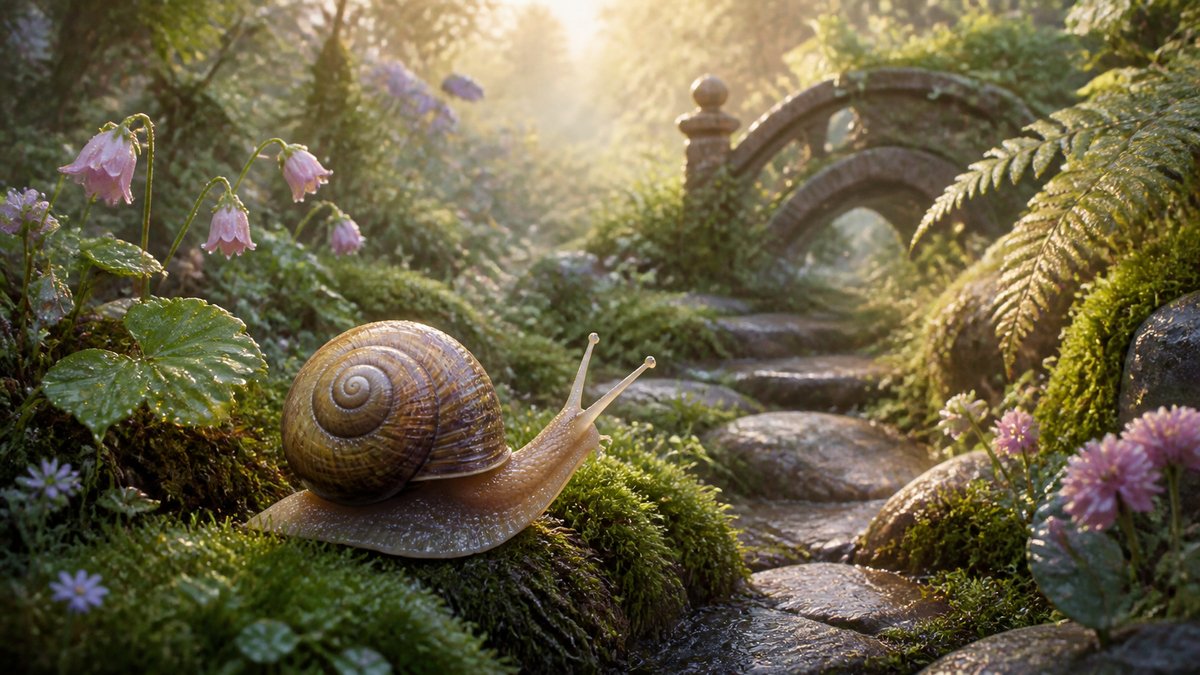
Snails are not usually the first creatures people praise in a garden.
They are small, slow, and easy to overlook unless they appear somewhere obvious, like a path after rain or the edge of a pot in the morning. But in the right setting, snails can feel surprisingly charming. In shady corners, mossy borders, and damp storybook gardens, they seem less like intruders and more like part of the atmosphere.
That is part of what makes them interesting.
Snails bring a different kind of beauty to a garden. They do not flash like hummingbirds or drift like butterflies. They belong to the quieter world of dew, leaves, stone, and slow observation. When people imagine miniature enchanted landscapes, snails often fit the picture almost automatically.
Snails Match the Pace of a Storybook Garden
Some gardens feel energetic and sun-filled. Others feel tucked away, hushed, and a little dreamy. Snails belong much more naturally to the second kind.
A storybook garden is rarely only about bright color. It is also about mood. Curved paths, cool shade, damp earth, soft moss, low-growing plants, and hidden corners all help create that feeling. Snails move through exactly those spaces.
Their pace matches the garden around them.
They do not rush the scene. They seem to belong to it.
This is one reason snails feel so well suited to whimsical garden imagery. Their movement is so slow that it almost turns into part of the landscape.
Their Shells Make Them Feel Like Tiny Characters
Part of the charm of snails is that they do not look like generic little creatures.
Their shells give them shape, personality, and a kind of visual completeness. A snail seems to carry its home, its shelter, and its identity all at once. That makes it easy for people to imagine snails as miniature characters rather than just garden animals.
In a fantasy-style or childlike garden, that matters.
A rounded shell on a leaf or stone looks almost designed for illustration. Even people who do not think much about snails in everyday life often find them oddly lovable when they pause long enough to really look.
Rain and Snails Belong Together
Few garden scenes feel more quietly magical than a garden just after rain.
Leaves shine. Soil darkens. Air cools. Stones look deeper in color. And suddenly snails appear where they were hidden before. This close connection with damp weather is one reason snails feel so strongly tied to storybook garden moods.
They seem to emerge when the garden becomes softer.
That timing matters emotionally. Rain often changes a garden from bright and busy to reflective and intimate. Snails fit that quieter version of the world beautifully.
If you enjoy that rain-washed atmosphere, Petrichor and the Beauty of Rain on Dry Earth belongs naturally beside this kind of garden feeling.
They Make Small Spaces Feel Alive
Snails are especially good at making a garden feel detailed.
Large creatures can define a landscape, but tiny creatures enrich it. A small shell beside a fern, a slow track across damp stone, or a snail tucked under a leaf can make even a very ordinary corner feel inhabited.
This is one reason miniature gardens and fairy-garden scenes often feel incomplete without some sign of tiny life.
Snails help a place feel scaled for close attention.
They invite the eye downward. They remind us that the garden has a whole lower world of texture and movement that is easy to miss when we only admire the bigger flowers.
Snails Work Well in Shady, Mossy Imagination
When people picture an enchanted garden, they often imagine moss, ferns, old stone, low light, and a path that feels slightly hidden.
Snails fit naturally into that world.
They do not belong as strongly to the dazzling midday garden full of sharp heat and bright movement. They feel more at home in a place where moisture lingers, the light is filtered, and details matter more than spectacle.
That is why snails pair so well with the softer side of garden fantasy.
If you love that greener, quieter atmosphere, What a Shade Garden Teaches Us About Slowing Down speaks to the same calm and layered beauty.
They Encourage Slow Looking
A person does not usually notice a snail while rushing.
You see one when you bend closer, pause on a path, or let your attention settle into smaller things. That makes snails unusually good companions to the kind of garden experience many people say they want more of: slower, quieter, and more observant.
There is something refreshing about that.
Not every beautiful thing in a garden has to be large, bright, or instantly impressive. Some of it asks to be discovered at a gentler pace.
That may be one reason snails seem so at home in gardens that feel literary or nostalgic. They reward patience, and patience is one of the most story-rich qualities a garden can ask from us.
If you enjoy that quieter way of noticing, What Makes a Nature Walk Feel Restful Instead of Rushed belongs very naturally in the same conversation.
Snails Are Not Only Cute
Of course, snails are not admired by everyone, and it would be unrealistic to pretend otherwise.
Depending on the garden and the species, they can be frustrating to gardeners who are trying to protect tender plants. That is part of the real relationship people have with them. But even with that practical tension, snails still hold a strong place in the visual and imaginative life of the garden.
This is worth noticing because many beloved garden creatures are not purely decorative.
Real gardens are full of mixed feelings. Some creatures help, some nibble, some pollinate, some decompose, some surprise us, and some do a bit of everything depending on circumstance. Snails belong to that more complicated truth.
And in a whimsical post like this, that complexity actually makes them more interesting, not less.
Storybook Gardens Need More Than Flowers
When people try to create a magical garden mood, they often focus only on blooms.
Flowers certainly matter, but atmosphere comes from more than petals. It comes from stone, texture, shadow, weather, scent, and signs of life at different scales. A storybook garden feels rich because it seems to contain a whole little world, not just pretty plants.
Snails contribute to that richness.
They add movement without hurry and presence without noise. They make the garden feel lived in by smaller beings, which is exactly what helps whimsical spaces feel believable.
That is also why snail imagery appears so easily in children's illustration, fairy-garden design, and gentle fantasy scenes. A snail instantly suggests that the world has tiny stories happening inside it.
Their Quiet Presence Changes the Mood
Some animals electrify a garden with motion. Snails soften it.
They turn attention toward the ground, toward dampness, toward close detail. They make the garden feel more secretive, more patient, and a little older. A snail on a stone path can make a space seem as though it has been quietly alive for a very long time.
That kind of mood is powerful.
It is one reason people are so often drawn to gardens that look a little overgrown in the best possible way. A garden that is too polished can lose some of its wonder. A garden with moss, shade, and tiny hidden life tends to keep it.
A Small Creature With Storybook Charm
Snails belong in storybook gardens because they carry the same qualities those gardens do.
They are small but memorable.
They are gentle, detailed, and closely tied to rain, shade, and mossy beauty.
They ask for slower attention and reward it with charm.
And while they may never be the most glamorous creatures in the garden, they do something many showier beings cannot: they make the whole place feel more intimate.
That may be their real magic.
A snail does not dominate a garden scene. It deepens it.