Fallen Leaves and the Wildlife Sheltering Beneath Them
Fallen leaves shelter insects through colder weather. Find places to keep them, handle autumn cleanup gently, and notice wildlife at ground level.
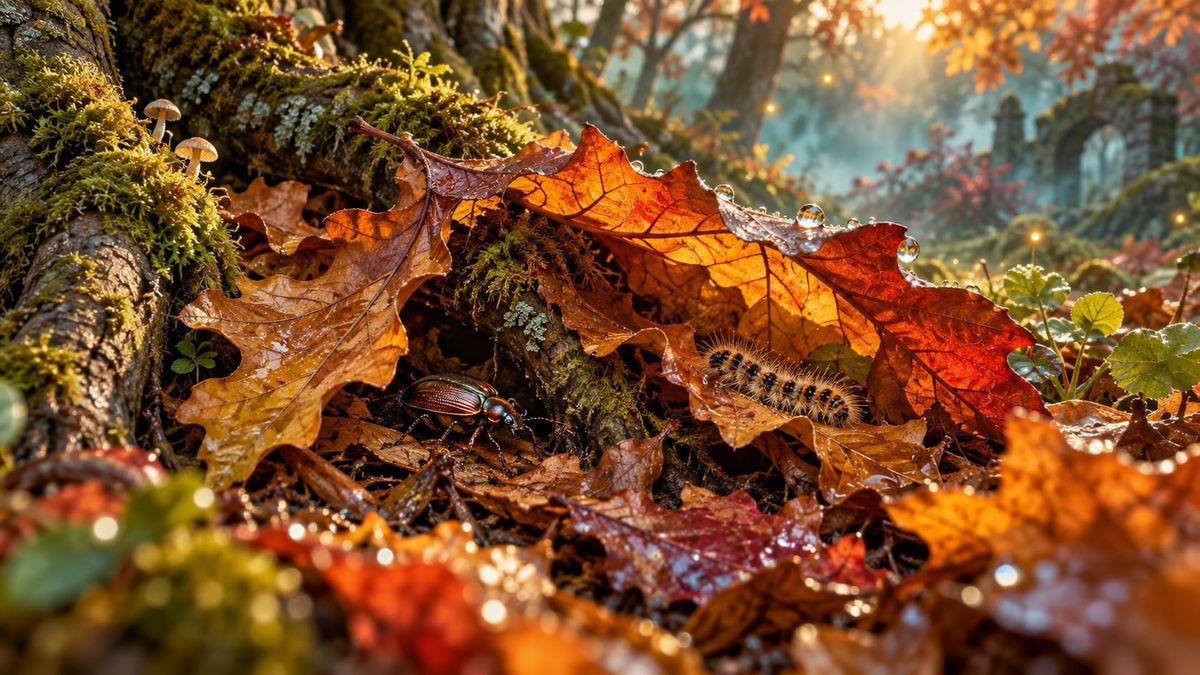
A leaf lands on the lawn, and the autumn cleanup begins. Then another falls. By the weekend, the rake is out and the bags are waiting.
Before clearing every corner, take a look beneath a shrub or along the base of a hedge. Those curled leaves may already be serving as shelter. In a garden preparing for colder weather, the ground can be surprisingly busy even when the flowers have gone quiet.
Fallen leaves give us a chance to care for wildlife through a small change in an ordinary chore: deciding where the leaves can stay.
Who Uses Fallen Leaves?
Leaf litter is the loose layer of leaves and other plant material that gathers on the ground. The spaces between its pieces offer hiding places, and the cover helps soften exposure to weather.
Different animals use it in different ways. Some shelter there temporarily; others spend a stage of their life cycle among fallen leaves. What you find depends on your region, the plants growing nearby, and the season.
The Xerces Society's winter habitat resources explain that butterflies, moths, beetles, and other invertebrates can depend on this cover. That is a good reason to look at a leaf-covered border as habitat before treating it as waste.
For anyone who enjoyed Why Moths Belong in the Night Garden, this adds another part of their lives to the picture. The flowers we admire are only one piece of the places insects need.
Choose a Corner Before Picking Up the Rake
You do not need to leave your entire garden untouched. Start with a place where leaves already collect naturally and can remain without causing a problem.
A sheltered border, the space beneath shrubs, or a quiet section beside a hedge can work well. Think about where people walk, where water drains, and which plants need open space around them. A loose layer in a suitable bed is different from a deep, wet heap pressed against delicate plants.
There is room for both practical access and wildlife shelter. Clear the steps and the path to your door. Keep drains open. Then let a few less-used places hold their autumn cover.
If a thick accumulation threatens your lawn, gently move some leaves into a suitable nearby border. Keeping them within the garden preserves more possibilities than sending every bag away.
Move Leaves With Care
Some of the animals using leaves are difficult to see. A curled leaf can conceal a tiny occupant, and a quiet pile may contain more life than a quick glance suggests.
Where possible, leave an established patch in place. If you need to move it, work gently and keep the destination nearby. Avoid shredding leaves that you are retaining specifically as wildlife shelter, since machinery can harm animals hidden within them.
This is also a useful moment to reconsider how much of the garden needs clearing at once. Working in small sections lets you keep undisturbed areas while managing the spaces you use every day.
The same thinking applies above ground. Your post on seed heads in late-summer gardens looks at the value of keeping selected plant structures after flowering. Leaves and standing stems offer different resources, so a garden with variety has more to offer.
A Few Reasons to Clear a Particular Patch
Leaving leaves is a useful option, but location matters.
Wet leaves on paving can be slippery. A blocked drain needs attention. Plants affected by a disease may require specific cleanup advice, rather than having their fallen material spread around the garden. Deep accumulations can also overwhelm small plants.
Treat these as local decisions. Clear the area that needs attention and retain suitable cover elsewhere. You can make thoughtful choices without applying the same rule to every square foot.
Watch From the Edge
A patch of autumn leaves can become a small observation spot. Visit it after rain, or sit nearby while birds search through the border. Look for movement along the edges and notice how the same leaves change as they settle.
Try watching without turning over the whole layer. Shelter works best when its occupants can remain sheltered, and repeated visits often reveal more than a single thorough inspection.
Children can enjoy this too. Ask them to compare a dry leaf with one darkened by rain, find three different shapes, or listen to the sound of a bird moving through the border. These simple activities bring the autumn garden closer without needing to collect its inhabitants.
You may begin noticing other residents nearby, including the hunters discussed in How Garden Spiders Build Webs and Help the Garden. A familiar garden starts to feel fuller when you pay attention at ground level.
One Small Change This Autumn
Before your next cleanup, choose one suitable place where fallen leaves can remain through the colder season. Keep the paths comfortable, tend the plants that need care, and give that sheltered corner time.
It might be an unremarkable strip beneath a hedge. You may walk past it every day without seeing an animal. That is fine. Its value does not depend on putting on a show.
Sometimes caring for a garden means finishing a task. Sometimes it means recognizing that a small part of the work is already being done by the garden itself.